
UI / UX
User interfaces and “user experience” ideas.
-
Background: Every so often, a ridiculous story comes out about someone driving 400 miles to the wrong location because they went to the “right” address (“123 Snake Street”) in the wrong city. In the ancient “paper map” days, this type of mistake would be nearly impossible, but modern GPS systems make it possible for a…
-
Background: A cat owner may install a “cat door”—a cat-sized flap—in a door in their house (Fig 1). This allows a cat to travel freely even when the human-sized door is closed. A cat door also removes the need for the cat to carry a set of keys. Proposal: But why should cats get all…
-
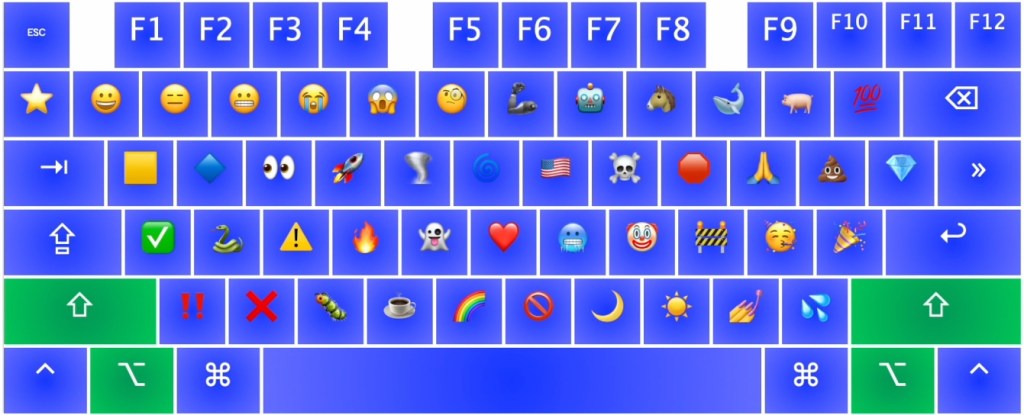
Background: Typing emoji (e.g. 😀😑😬😭😱) on a desktop computer’s physical keyboard is a surprisingly involved process. The Issue: On a phone, a user can invoke a special emoji keyboard. But on desktop computers, there are only two solutions: 1) selecting the emoji from a giant on-screen list or 2) hoping that the application you want…
-
Background: Cars, trucks, motorcycles, and bicycles all share the roadways.However, drivers often entirely fail to notice bicyclists and motorcyclists. One study even suggests that drivers may often literally tune them out entirely: https://www.google.com/search?q=car+drivers+don%27t+notice+bicycles+study. For this particular idea, let’s focus on motorcycles, although the same general principle will also apply to bicycles. The Issue: At night,…
-
Background: When the weather is cold, it’s often unappealing to wake up and get out of bed (Figure 1) to start your day. Proposal: The proposal is simple: a person needs something to look forward to when getting out of bed. This is essentially a “waystation” or “halfway point” of waking up. A person can…
-
Background: The current “casual” style of watching movies at home is very convenient, but lacks much of the impressive and ostentatious style of films in the golden age of cinema. Typically, the “film watching” experience is as follows: 1) turn on TV (Figure 1), 2) press “play” on a remote. Proposal: Let’s bring back classic…
-
Background: It is not always easy to interpret the emotional state of another person. For example, a person might not realize that their coworker is extremely annoyed or unusually morse. This can lead to misunderstandings and hard feelings that could have been avoided if it were somehow unambiguously obvious what a person’s emotional state is.…
-
The Issue: A common user complaint about “Big Tech” is that it can be literally impossible for customers to contact an actual human for tech support. For example, a user may have literally no recourse if: 1) their email account was terminated (e.g. due to “spamming”), 2) their video hosting was deleted (e.g. due to…
-
Background: Certain types of apartment / home arrangements are rare in the United States (e.g. courtyard apartments or a second “back” unit behind a front house). Such residences are often not directly visible from the road, and accessing them may require going through a gate. They may also have addresses that include fractions or letters,…

