
Transportation
Transportation-related items, e.g. public transit, buses, subways, cars, bicycles, and more.
-

Background: In many cities, there are a large number of “almost-a-parking-spot” locations (for example, between two driveways) that can only fit an extremely small car. Additionally, most popular models of small cars have gotten substantially larger over time. For example, a 1959 Mini Cooper is 120 inches long, while a 2005 model is 143 inches…
-
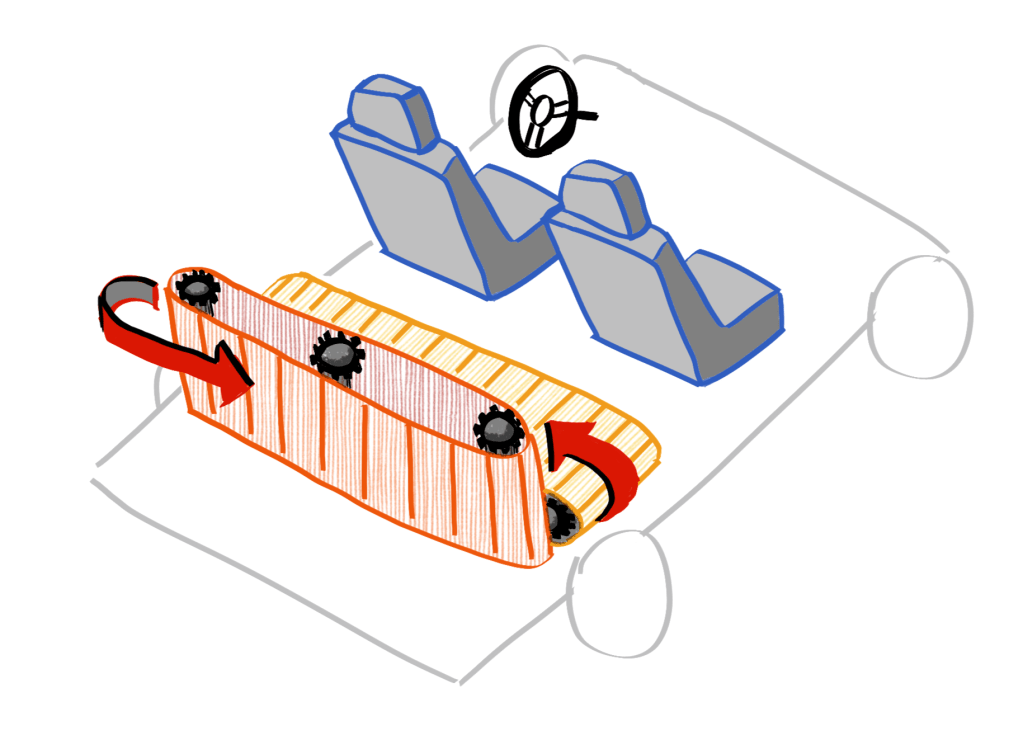
The issue: One transportation model used by ride-sharing cars (formerly called “taxis”) is the “carpool”-style trip, where multiple passengers are picked up and dropped off at various points along a mostly-shared route. (Lyft Line and Uber Pool are currently the most well-known of these.) This “carpool”-style trip is cheaper than a normal ride for each…
-
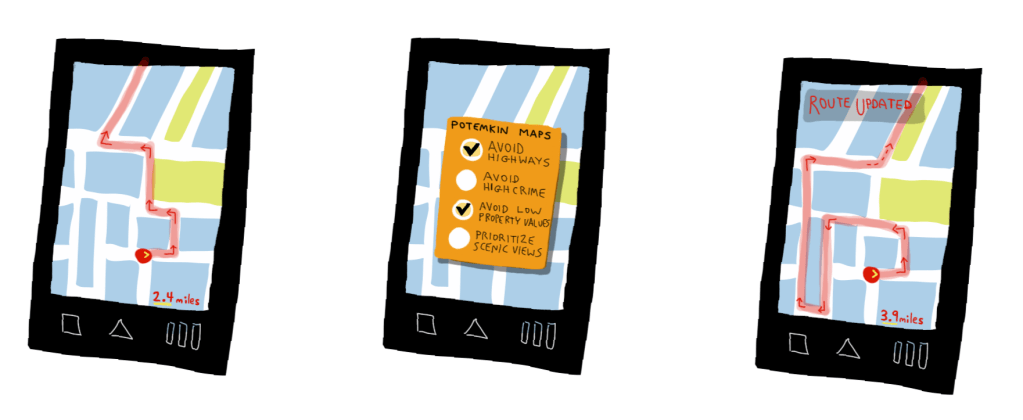
Background: Phone map apps often have a few optional settings for a route, such as: Avoid highways (for driving) Fewer bus transfers (for public transit) Avoid hills (for walking) The issue: Sometimes, you want drive on the most scenic route from point A to point B, without too much concern about efficiency. For example, you might…
-

Background: In most American cities, four-way intersections with stoplights are the most common form of traffic control. The issue: As a pedestrian, these intersections are frustrating: if the stoplights are not synchronized, you’ll randomly encounter red lights while walking from block to block. But even when lights are synchronized, they are synchronized for car driving…
-

Background: In a hypothetical future where self-driving cars are increasingly common, they’ll have to do a really good job of automatically distinguishing between things that require sudden braking (e.g. a person in the roadway) and things that are OK to hit (e.g. a tumbling empty cardboard box). The issue: This is a hard problem. When…
-

The issue: One ever-present hazard for bicyclists is the possibility of being “doored”—hit by a suddenly-opened driver’s side door of a parked car. A similar issue confounds carpool passengers: when exiting a full vehicle, the driver’s-side passenger must open the door directly into traffic (since they cannot exit on the curb side). This presents the…
-
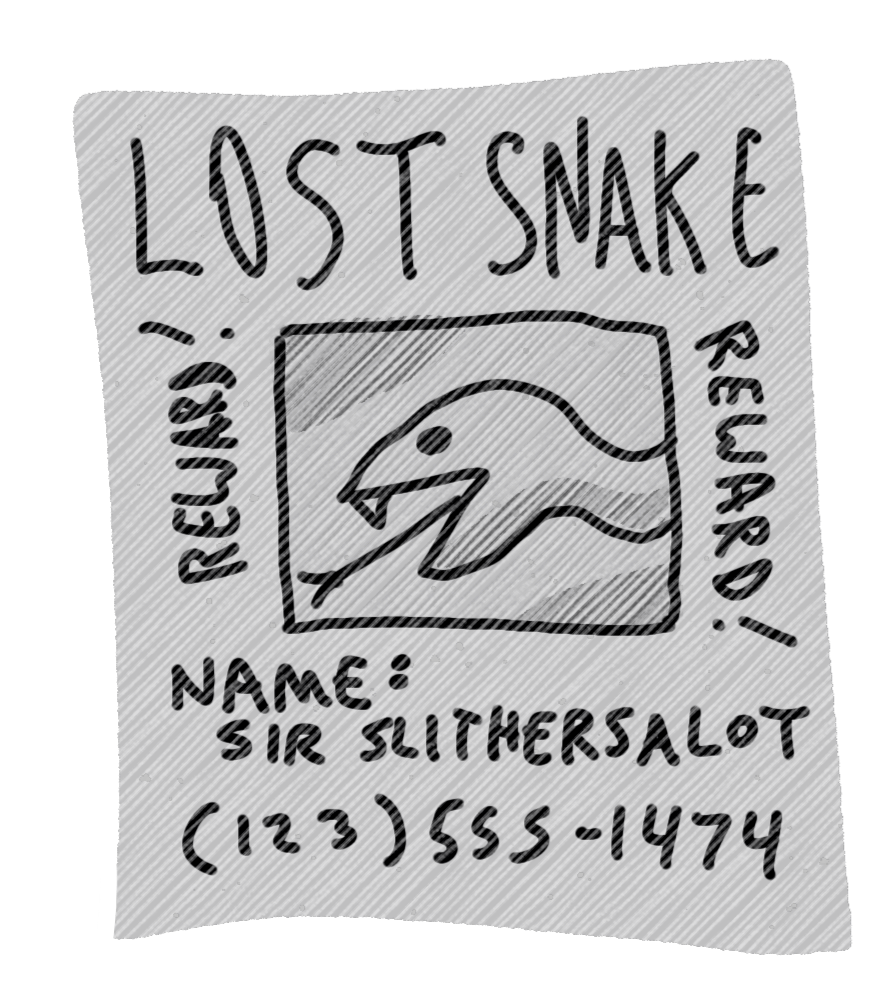
Background: “Lost cat” and “lost dog” signs are often placed up on telephone poles (Fig. 1), but it’s unlikely that a specific person who sees a lost pet will also have seen the sign (or even know that the pet is actually lost in the first place). Proposal: In order to add more people…
-
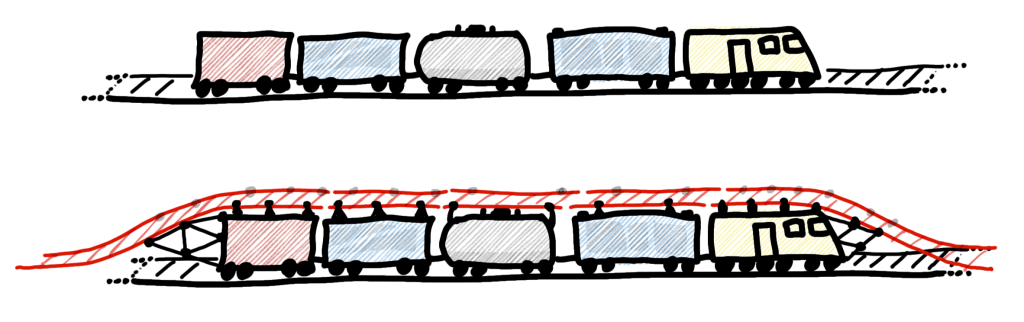
Background: Rail-based transportation has an inescapable problem: in a single-track situation, there is no way for a train to pull over and let another train pass. The issue: Thus, a single stopped train can block an entire track indefinitely. And a slow train can’t be overtaken by an express train. This can be solved by…
-
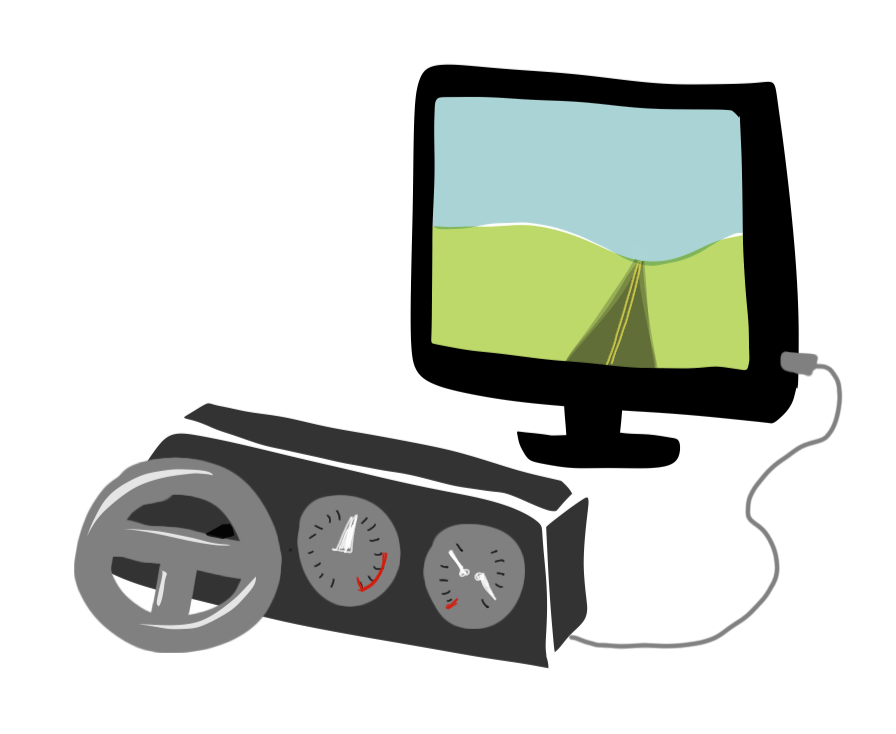
Background: In the United States, an employed person has two conflicting goals: To commute to their job as fast as possible (ideally by “hyperloop” or helicopter), …and to live as far away from their workplace as possible. To these ends, thousands of man-hours have gone into new legislation preventing residences near places of employment (zoning…
-

Background: Airport terminals often have small golf-cart-like trams that can be driven around in the passenger concourses. These are often used to help people move around the concourses (for example, one might be used to help a passenger with a leg in a cast who is trying to make it to a connecting flight). The…
 WorstPlans: updated every Monday since July 2014!