Art
-
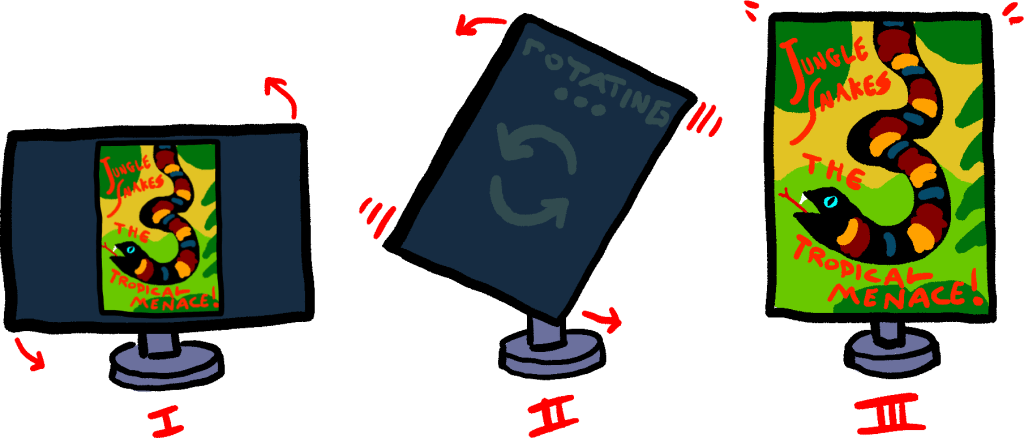
The Issue: Vertical orientation is the standard for short-form videos, which are optimized for viewing on (tall) cell phone screens. Unfortunately, desktop monitors are wide, not tall. This means the full-screen vertical video experience is suboptimal: such a video only fills about a third of the display area (Figure 1). Proposal: A vertical video aficionado could fix…
-
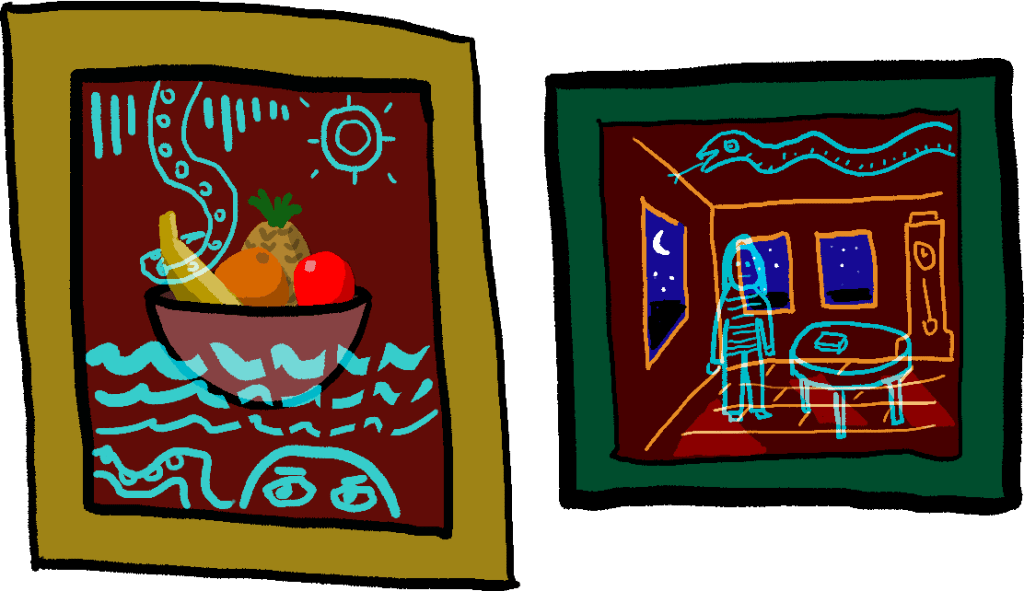
The Issue: Art museums have their merits, but they are rarely described as “interactive.” For a large percentage of the population, visiting an art museum is suspiciously similar to just viewing a tour on YouTube or seeing the same works in a printed book. Proposal: There’s a way to make the art viewing experience more…
-
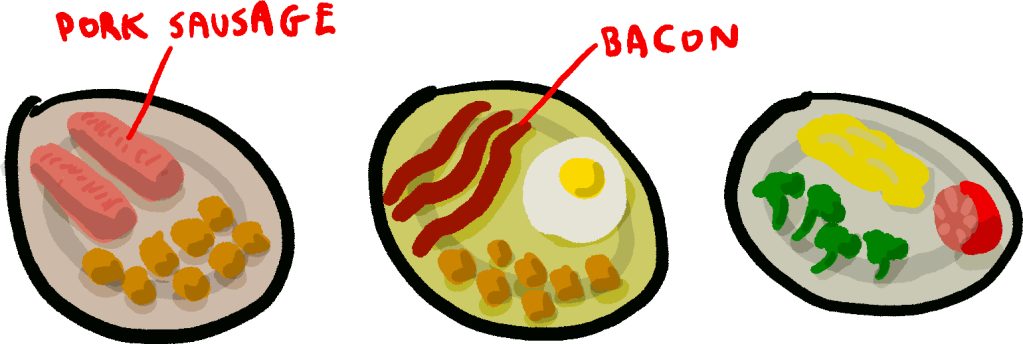
The Issue: Many movies feature a protagonist who the audience sympathizes with, despite the fact that in real life, that same audience might disapprove of such a person. There’s a lack of ethical consistency here. Why would a moviegoer root for an amoral assassin in a movie (e.g., in Day of the Jackal), yet support…
-
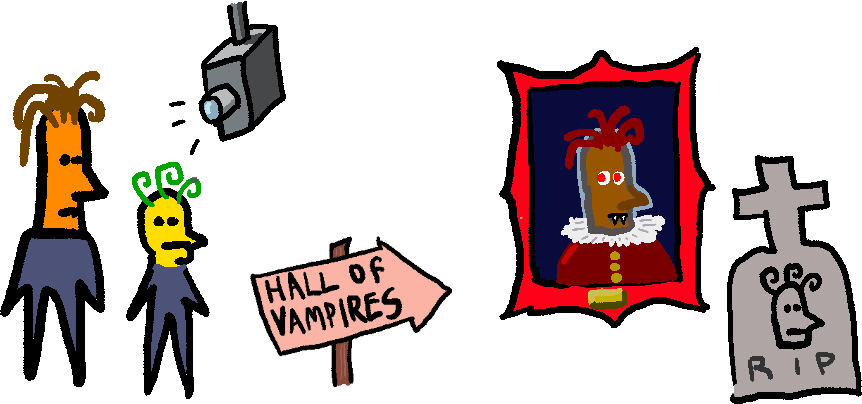
Background: Haunted houses are a Halloween experience that can range from extremely cheap and homemade (“this bowl of grapes is… human eyeballs!!!”) to extremely expensive and professional (e.g. Disney’s Haunted Mansion, although that’s not technically a “Halloween” experience). The goal of a haunted house is to evoke a feeling in the attendees that may range…
-
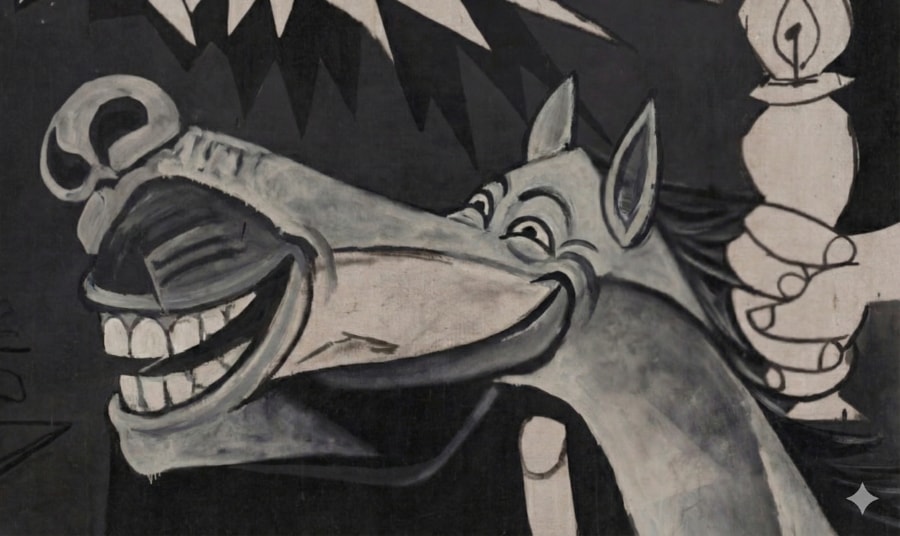
Background: Sometimes, classic art intentionally evokes a negative emotion. Here are some classic examples: The Issue: However, perhaps the world is already cruel enough, and humans don’t need to be subjected to further psychological trauma. But how can we continue to enjoy classic art while simultaneously making sure our fragile emotional state is coddled at…
-
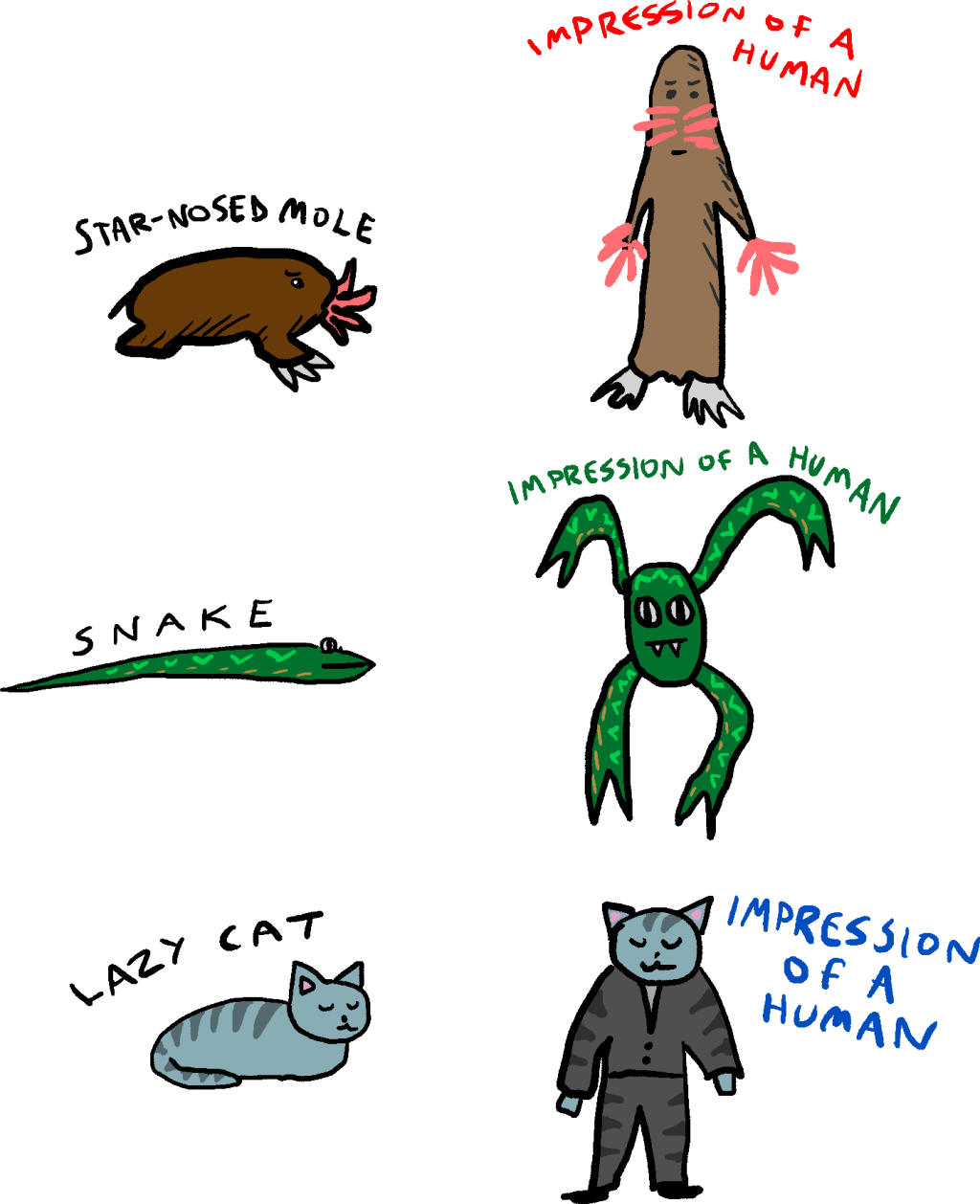
Background: When humans draw pictures of animals, they usually “human”-ify them in ways that don’t really make any sense: for example, adding eyebrows to a fish, or adding a face to a jellyfish. Humans also typically represent an animal as whatever is “most noteworthy” about it to a human: for example, a spider might be…
-
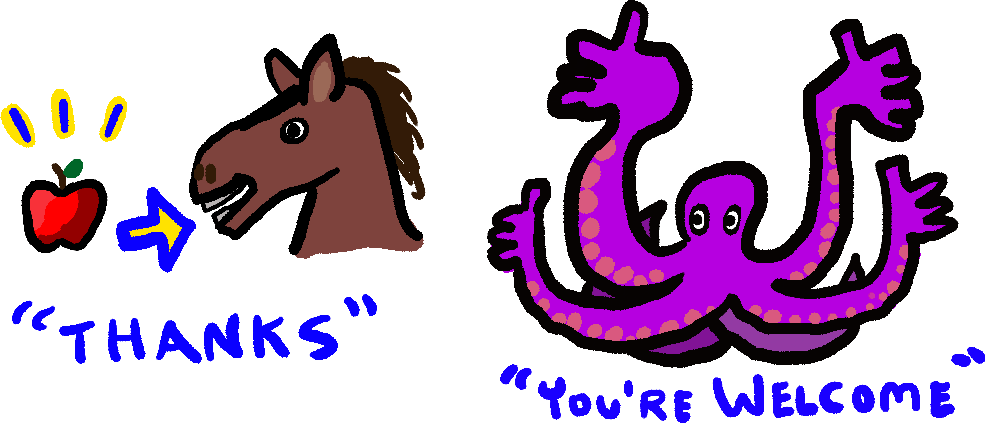
Background: There are a surprisingly huge number of emoji for expressing relatively rarely-used concepts, such as 🎍 (bamboo decoration), 🤾🏻♂️ (handball), 🎠 (carousel horse), 🛖 (thatched-roof cottage), and 🛋️ (couch and lamp). The Issue: Weirdly, there is no “standard” emoji for unambiguously expressing the concept “thanks!” or “you’re welcome!” One commonly seen approximation is 🙏…
-

Background: People frequently leave notes around the house, either as reminders to themselves or as reminders to family members or roommates. For example: “Remember to push the fridge door shut, or it stays open!” or “Remember to lock the top lock when you leave the house!“ The Issue: These reminders are all fine and good,…
-
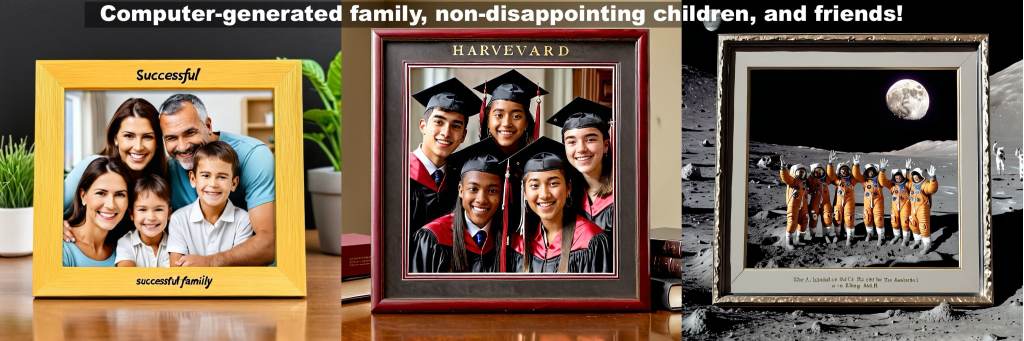
The Issue: One counterintuitive phenomenon is that people sometimes get depressed during the holidays when they realize that their real family and friends don’t match the idealized holiday expectations that have been set by TV and movies. Proposal: Since TV and movies present a “fake” life that can’t possibly be achieved in reality, the solution…
-

Proposal: Illustrated children’s books usually consist of two main things: Unfortunately, books written before the advent of computer-generated images are stuck with “stale” illustrations: each page contains a single fixed image that will never change. But thanks to machine learning, we can fix this! Observe the new style of children’s book, where instead of an…
 WorstPlans: updated every Monday since July 2014!