
Art
-
Abstract: The 2006 movie Idiocracy depicts an extremely stupid consumerist-focused future. One of the scenes shows a character watching a TV show on a television surrounded by an unbelievably large number of intrusive ads (Figure 1). But is this an unbelievable fraction of screen real-estate to dedicate to ads? Let’s find out! Materials & Methods:…
-
The Issue: When multiple people try to view different screens in a dark room, it can be quite annoying. For example, a person trying to watch an atmospheric dark movie might be annoyed by a person playing on their cell phone, yet the cell phone user might also be constantly blinded by flashes of light…
-
Background: In ages past, certain vocations had a high technical barrier to entry. For example, to be published writer, a person would have needed a publishing deal (or to buy their own printing press). Similarly, when computers were extremely expensive, a person would need a $5000 computer and a $500 compiler just to write a…
-
Background: In the early 2020s, the appeal of short (< 1 minute) videos became widespread, with TikTok, YouTube Shorts, Instagram Reels, and other services vying for market share. (Surprisingly, the earliest major entrant into this genre, Vine (https://en.wikipedia.org/wiki/Vine_(service)), completely failed and was shut down in 2017). The Issue: Unfortunately, the popularity of “bite-sized” videos has…
-
Background: Every year, tens of millions of coloring books are sold to children and adults alike. The Issue: Filling in a coloring book can be quite a time-consuming process. Even with frantic scribbling and thick markers, it’s a slow process to fully color even a single page in a coloring book (Figure 1). Proposal: Thanks…
-
Background: Most musical instruments are capable of playing more than one note a time. This is typically referred to as a “chord.” The Issue: Unfortunately, the list of chords is relatively small and well-understood (Fig 1): once music students learn them, they won’t have any more aspirational chord-learning goals, and will surely become demoralized. Proposal:…
-

Background: Thousands of hours of food-themed television shows exist. Not all of these are strictly utilitarian “how to cook” shows, either—many consist of a charismatic host going from country to country and describing the fine tastes of exotic foods. The issue: This is a bit strange, isn’t it? Television is completely incapable of conveying taste,…
-

Background: In many movies and books, a financial amount is discussed at some point. For example, a character may remark that a heist “could be worth 100,000 florins” or “the estate had fallen on hard times, and now generated only 576 denarii annually.” The issue: Is the amount discussed above a lot of money? Or…
-
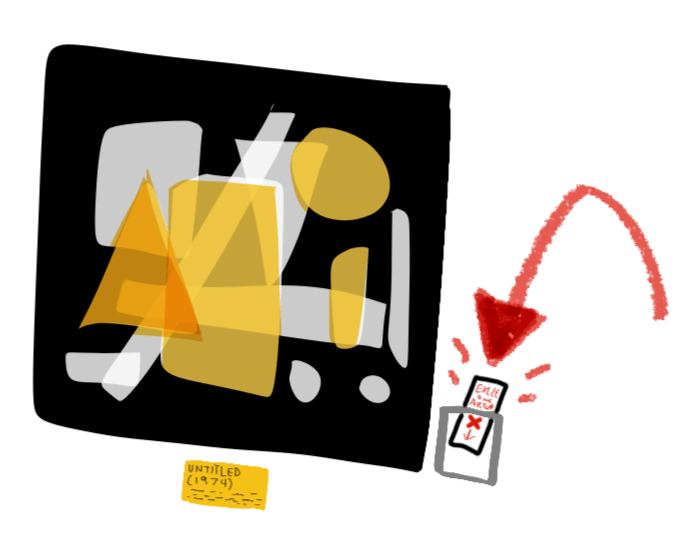
Background: Art museums often display a wide variety of pieces. Some art pieces may be considered to be pretentious or otherwise without merit. Unfortunately, currently there is no way to express that displeasure in an actionable form. Proposal: Art museums should sell two categories of ticket: a regular-priced general admission ticket (Figure 1), and a…
-

Background: Copyright laws are generally over 100 years from the creation of a work. For example, a book written in 2020 will not be part of the public domain until after the year 2120. The issue: But if extending copyright so long is good, why is it that we allow it to expire at all?…
 WorstPlans: updated every Monday since July 2014!