Art
-
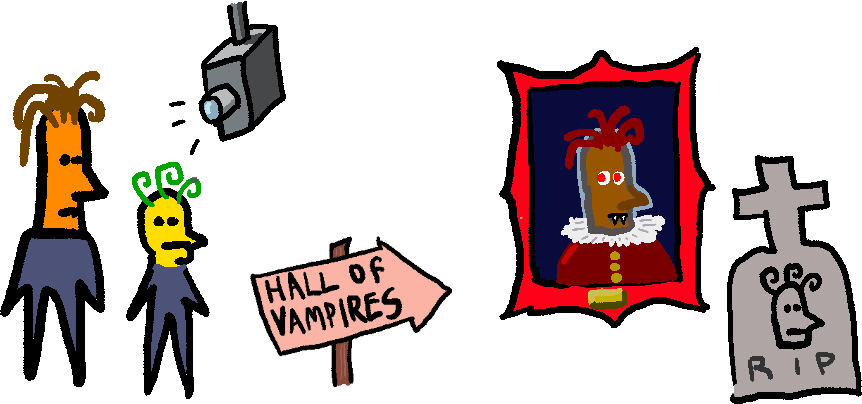
Background: Haunted houses are a Halloween experience that can range from extremely cheap and homemade (“this bowl of grapes is… human eyeballs!!!”) to extremely expensive and professional (e.g. Disney’s Haunted Mansion, although that’s not technically a “Halloween” experience). The goal of a haunted house is to evoke a feeling in the attendees that may range…
-
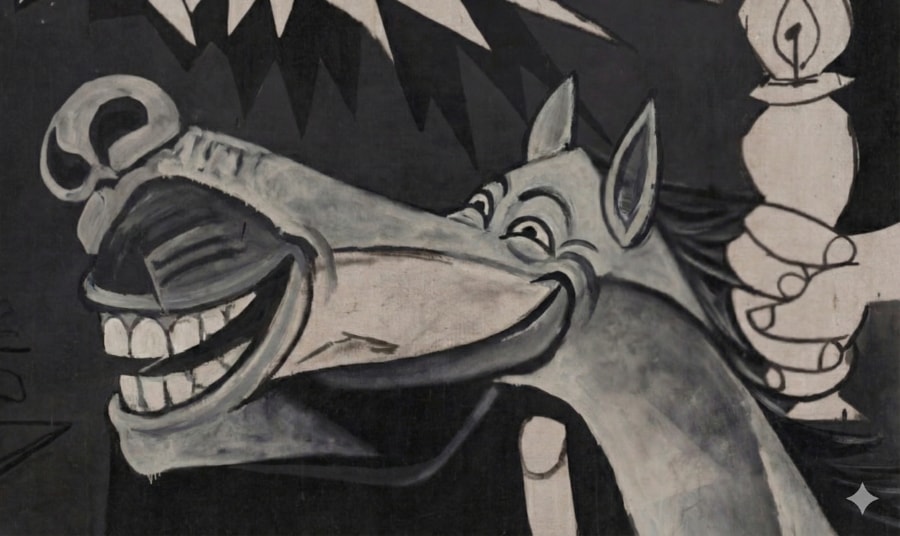
Background: Sometimes, classic art intentionally evokes a negative emotion. Here are some classic examples: The Issue: However, perhaps the world is already cruel enough, and humans don’t need to be subjected to further psychological trauma. But how can we continue to enjoy classic art while simultaneously making sure our fragile emotional state is coddled at…
-
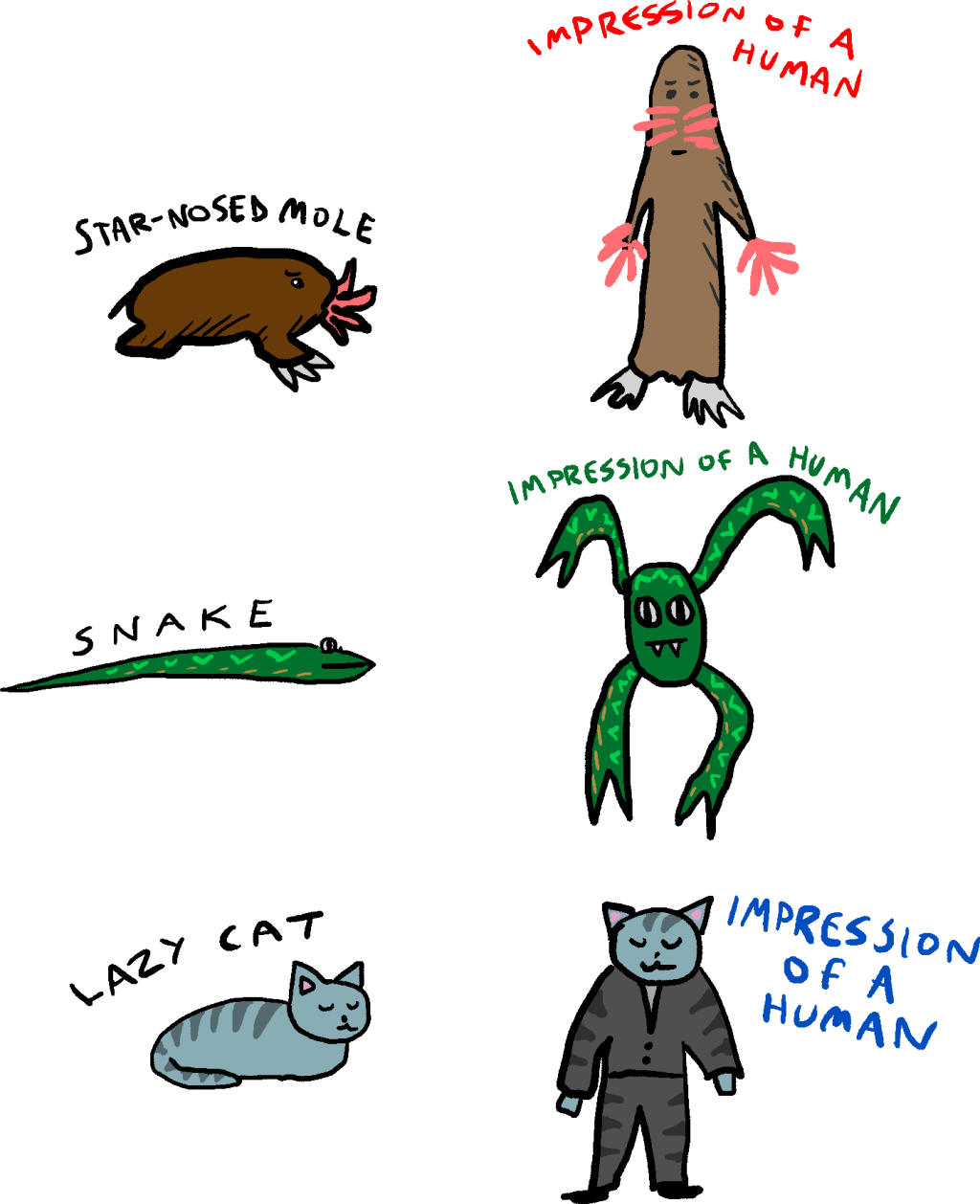
Background: When humans draw pictures of animals, they usually “human”-ify them in ways that don’t really make any sense: for example, adding eyebrows to a fish, or adding a face to a jellyfish. Humans also typically represent an animal as whatever is “most noteworthy” about it to a human: for example, a spider might be…
-
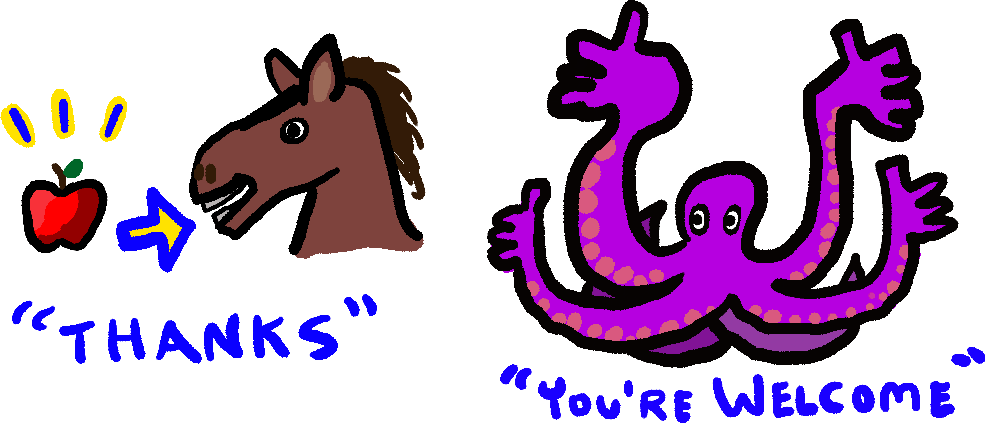
Background: There are a surprisingly huge number of emoji for expressing relatively rarely-used concepts, such as 🎍 (bamboo decoration), 🤾🏻♂️ (handball), 🎠 (carousel horse), 🛖 (thatched-roof cottage), and 🛋️ (couch and lamp). The Issue: Weirdly, there is no “standard” emoji for unambiguously expressing the concept “thanks!” or “you’re welcome!” One commonly seen approximation is 🙏…
-

Background: People frequently leave notes around the house, either as reminders to themselves or as reminders to family members or roommates. For example: “Remember to push the fridge door shut, or it stays open!” or “Remember to lock the top lock when you leave the house!“ The Issue: These reminders are all fine and good,…
-
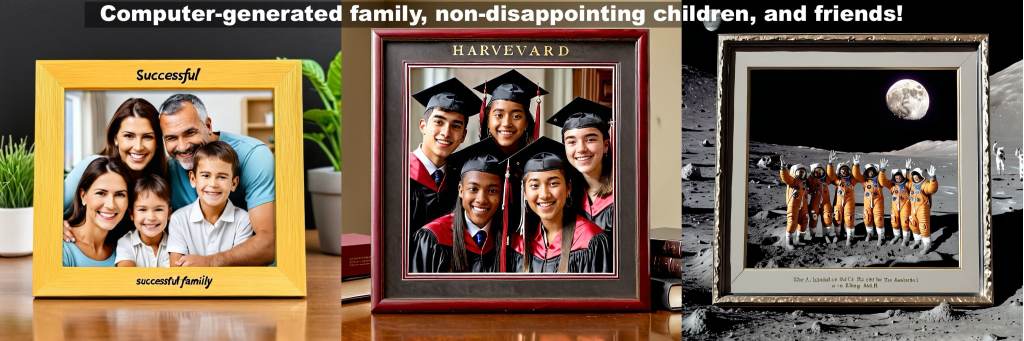
The Issue: One counterintuitive phenomenon is that people sometimes get depressed during the holidays when they realize that their real family and friends don’t match the idealized holiday expectations that have been set by TV and movies. Proposal: Since TV and movies present a “fake” life that can’t possibly be achieved in reality, the solution…
-

Proposal: Illustrated children’s books usually consist of two main things: Unfortunately, books written before the advent of computer-generated images are stuck with “stale” illustrations: each page contains a single fixed image that will never change. But thanks to machine learning, we can fix this! Observe the new style of children’s book, where instead of an…
-
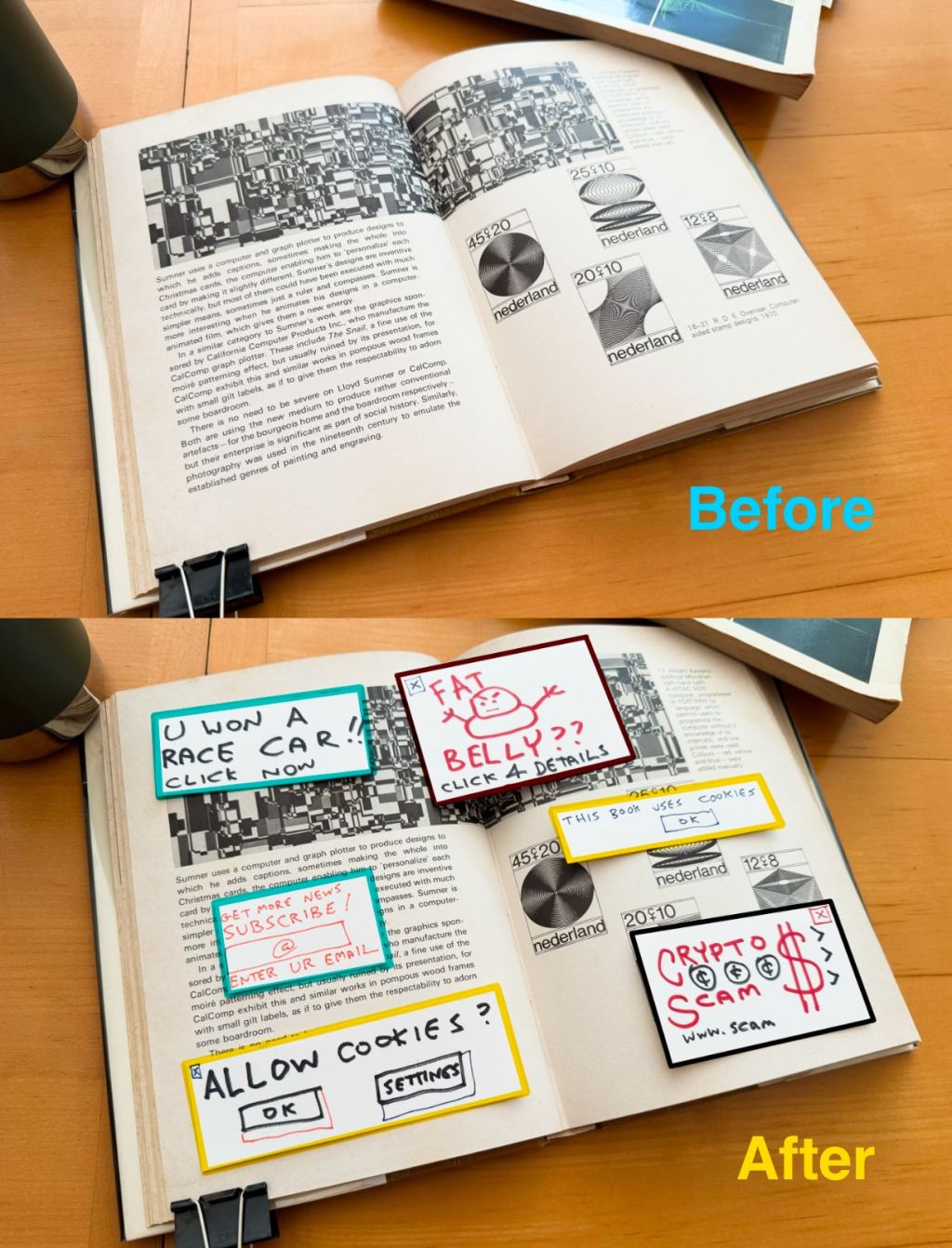
The Issue: The book-reading experience has not fundamentally changed in hundreds of years. What if we could “modernize” the experience by bringing the experience of reading articles on the web (Figure 1) to the physical-book form factor? Proposal: The solution is simple: a “normal” book can be enhanced with the normal bonus features of Internet…
-
Abstract: The 2006 movie Idiocracy depicts an extremely stupid consumerist-focused future. One of the scenes shows a character watching a TV show on a television surrounded by an unbelievably large number of intrusive ads (Figure 1). But is this an unbelievable fraction of screen real-estate to dedicate to ads? Let’s find out! Materials & Methods:…
-
The Issue: When multiple people try to view different screens in a dark room, it can be quite annoying. For example, a person trying to watch an atmospheric dark movie might be annoyed by a person playing on their cell phone, yet the cell phone user might also be constantly blinded by flashes of light…
 WorstPlans: updated every Monday since July 2014!