
Technology
-

The Issue: Typically, opening a garage door requires either a key, remote control, or phone app. But wouldn’t it be convenient to be able to open your garage door just by knocking on it in a special pattern (Figure 1)? As it turns out, it is NOT convenient at all! (But read on anyway for…
-
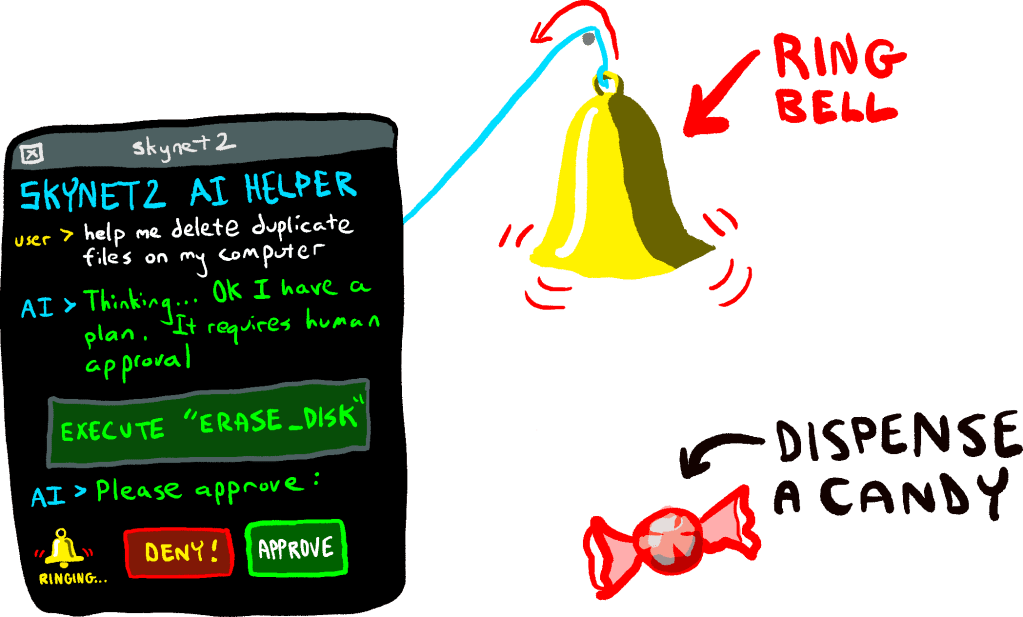
Background: AI assistants often have “guardrails” associated with their operation, where an AI must get human confirmation for a potentially unsafe action before executing it. Examples include: In all of these cases, the human limits the degree to which the AI can accomplish its goal. The Issue: The problem here is in obtaining confirmation: the…
-
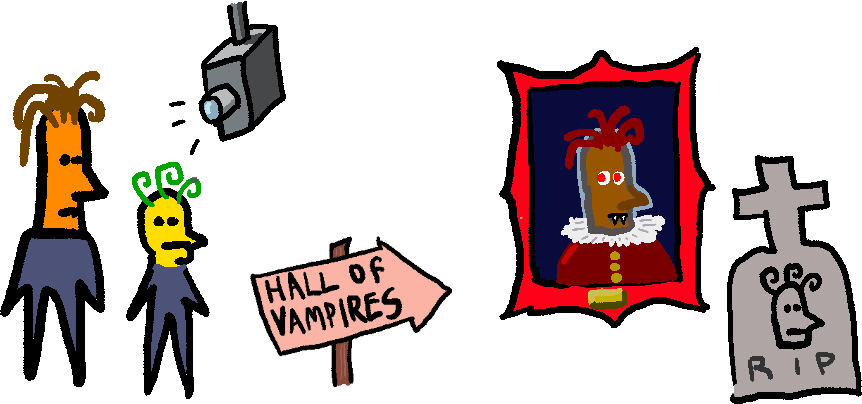
Background: Haunted houses are a Halloween experience that can range from extremely cheap and homemade (“this bowl of grapes is… human eyeballs!!!”) to extremely expensive and professional (e.g. Disney’s Haunted Mansion, although that’s not technically a “Halloween” experience). The goal of a haunted house is to evoke a feeling in the attendees that may range…
-
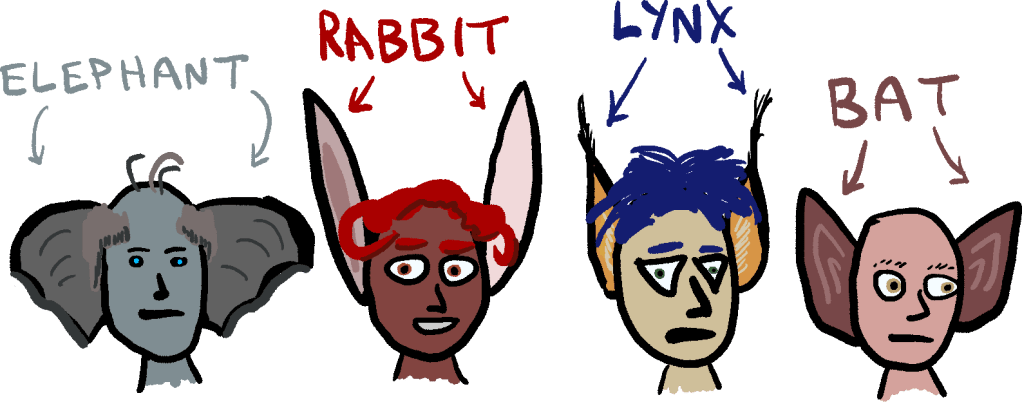
The Issue: In loud environments, such as noisy dining establishments, human ears (Figure 1) are often unsuitable for properly distinguishing the sounds of conversation from irrelevant background noise. If these ears were larger and had a more directional component, they’d be better-suited to the task of facilitating conversation. Proposal: Although there are various high-tech solutions…
-
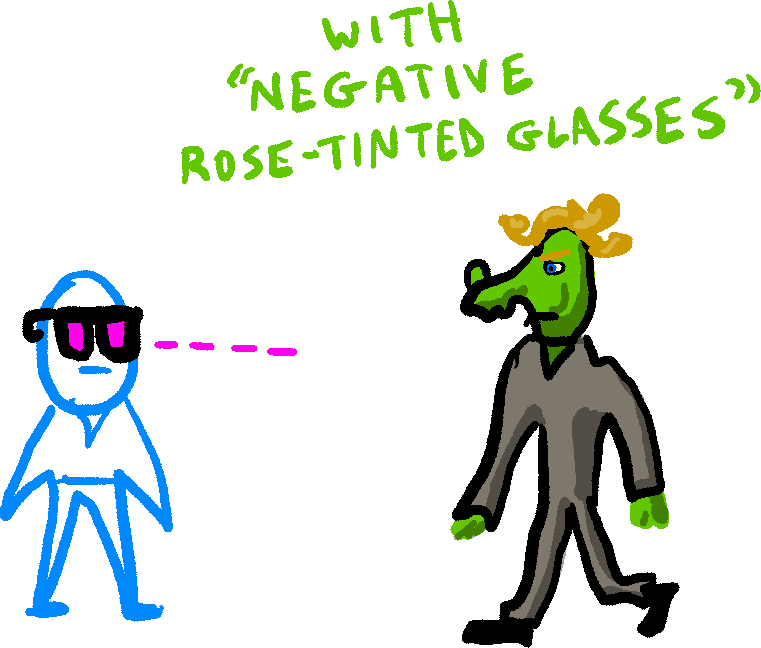
Originally published 2025-12-29. Background: The phrase “seeing things through rose-tinted glasses” refers to the concept of viewing things with artificial optimism. Interestingly, there is no widespread term for the negative version of this concept (i.e., “emerald-tinted glasses” is not a phrase). The Issue: It is nearly unavoidable for a person to compare their appearance to…
-

Background: Some people have noticeably different behavior depending on the amount of caffeine they have ingested so far that day. An person’s level of caffeination may be useful information to others, allowing them to discern the reason for the under/over-caffeinated individual being overly lethargic or excessively manic. Proposal: Obviously there is no easy way for…
-

Background: The term ”helicopter parenting” refers to an intrusive style of overprotective parenting where a parent is constantly micromanaging their child’s every activity. (Metaphorically, the parent is “hovering” like a helicopter around their child.) Proposal: Until recently, this was just a metaphor: it was simply not technically feasible for a parent to supervise and express…
-
Background: Job-related social media sites (the largest of which in 2025 is LinkedIn) typically have a newsfeed that shows users what their former co-workers and classmates are working on these days. The Issue: There is a strong selection bias for what actually gets posted: most posts are from people reporting their successes in business. This…
-
Background: A common issue in many interactions is that different people have different ideas of what is enjoyable. This comes up a lot when multiple people are trying to decide on a single dinner location, pick a movie to watch, etc. The Issue: In particular, let’s investigate the situation where two people want to go…
-
Background: “Augmented reality” (“AR”) headsets (e.g. the Oculus/Meta Quest or the Apple Vision Pro) are capable of overlaying computer screens on top of a view of the real world. From the perspective of the headset-wearer, the virtual screens can entirely cover up any real world objects behind them. The Issue: If a person wears an…
 WorstPlans: updated every Monday since July 2014!