
safety
-
The Issue: Climbing tall mountains is inherently unsafe. Dangers include falling, high winds, frostbite, venomous snakes, attack by eagles, and the high altitude “DEATH ZONE,” which really makes the whole peak-conquering thing seem like a bad idea. Additionally, this high degree of danger makes it impractical for children, the elderly, and the handicapped to fully…
-
The Issue: One issue that faces business owners is the issue of providing physical security. Businesses that have a lot of cash on the premises may be targeted for robberies, which can be dangerous to both employees and patrons. Ideally, we would have a way to discourage criminals from using deadly weapons in a robbery…
-
Background: Staircases are surprisingly perilous. Most people have, at some point, attempted to step up onto a “phantom” additional top step or been surprised to encounter the ground floor a step early (Figure 1). Some commercial buildings indicate the very top and bottom of a flight of stairs with a raised pattern. However, this is…
-
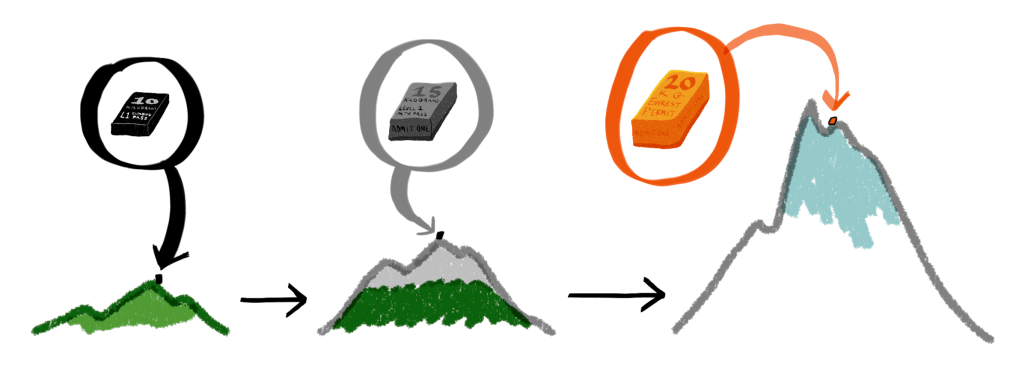
Background: Certain mountains require that climbers obtain a permit before embarking. Sometimes these can be expensive, but rarely is any mountaineering competency required. Everest permits, which are issued by the government of Nepal, cost approximately $10,000 (Wikipedia link). The issue: If too many people are crowded onto a narrow high-altitude route, disaster can result from…
-

The issue: One ever-present hazard for bicyclists is the possibility of being “doored”—hit by a suddenly-opened driver’s side door of a parked car. A similar issue confounds carpool passengers: when exiting a full vehicle, the driver’s-side passenger must open the door directly into traffic (since they cannot exit on the curb side). This presents the…
 WorstPlans: updated every Monday since July 2014!