
Transportation
Transportation-related items, e.g. public transit, buses, subways, cars, bicycles, and more.
-
Background: Cars have a lot of instruments. These typically indicate the car’s speed, the current gear, and various other qualities of debatable utility. Nowadays, cars have all sorts of additional sensors (potentially including LIDAR, cameras, GPS, etc…), but the dashboard instrument panel has not changed substantially since about 1950. Proposal: Let’s add a new indicator…
-

Background: By the year 2000, visionary futurists have estimated that over half the human population will live off-world, on another planet or in an orbital space colony. The Issue: Unfortunately, other planets generally have inconveniently not-matching-Earth orbital periods and day lengths. Thus, the calendar months will need to be adjusted in order for our intrepid…
-
Background: Imagine a boat: but someone added a canopy, and now it travels underwater (Fig. 1). Now you’ve got a submarine! That’s all the background you need. (Actual submarine construction may be somewhat more complicated.) The Issue: There has been interest lately in putting sails on oceangoing vessels again: this is proposed as a cheap…
-
Background: Drivers can signal their intent to turn or change lanes by using their turn signals (A.K.A. “blinkers”). Currently, a driver can express two concepts with these signals: “Left” “Right” The Issue: Sometimes, a driver’s might want to express a third concept: “Not turning” / “Continuing straight ahead” Proposal: The left and right brake lights…
-
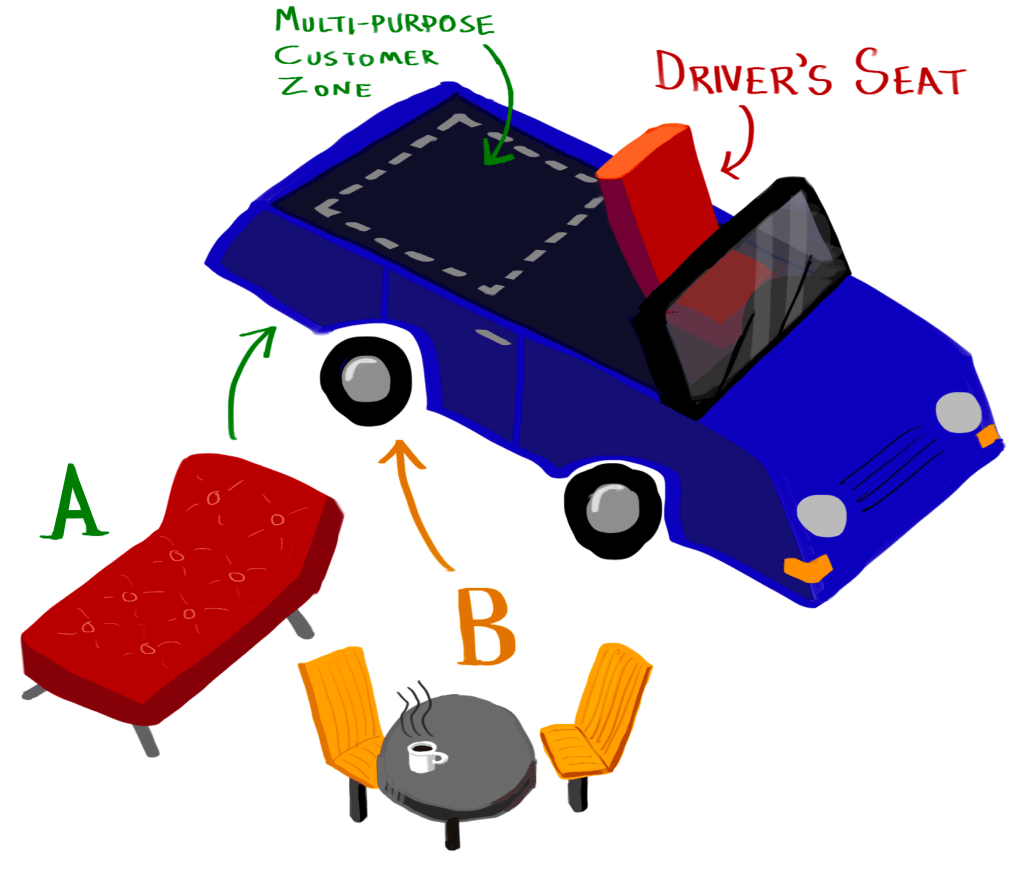
The Issue: Commuters often spend an hour or more in traffic every day. There are many chores in life that would be nice to handle in this hour, but it’s hard to (say) visit an optometrist while you’re in a car. Proposal: Until now, that is! This proposal is so simple, you’ll wonder why it…
-

Background: When people travel long distances, it’s not uncommon for them to get some kind of illness upon arriving. But it seems like the locals are rarely sick at the same frequency. Why is that? Beats me! But maybe it’s because the immune systems of the local residents are already “tuned” for local conditions. Let’s…
-

Background: When traveling in a vehicle, a person’s intuitive sense of speed is partly determined by the feeling of air movement. For example, going at 30 miles per hour on a bike (enclosed cabin: no) may feel faster than going 600 miles per hour in an airplane (enclosed cabin: yes). The issue: It’s important for…
-

The issue: Imagine that you are driving a car down a narrow road and you see a person unloading groceries from a car trunk. There are two common options: Continue driving: hope the person unloading the car doesn’t walk out into the street Honk the horn, to inform the person unloading the car that you…
-
Never get on the wrong train again (assuming your city has a functional public transit system), thanks to these new musical cues—enjoy country music and/or smooth jazz on your entire commute! Also, it’s the same songs every single day.
country western, green line, japanese subway jingle, jingle, metro, metro stations, Music, music for subways, rail line, red line, sgt. pepper, stations, subway, subway line music, subway music, subway stations, subways, train jingle, train music, train theme, trains, transit line leitmotifs, transit theme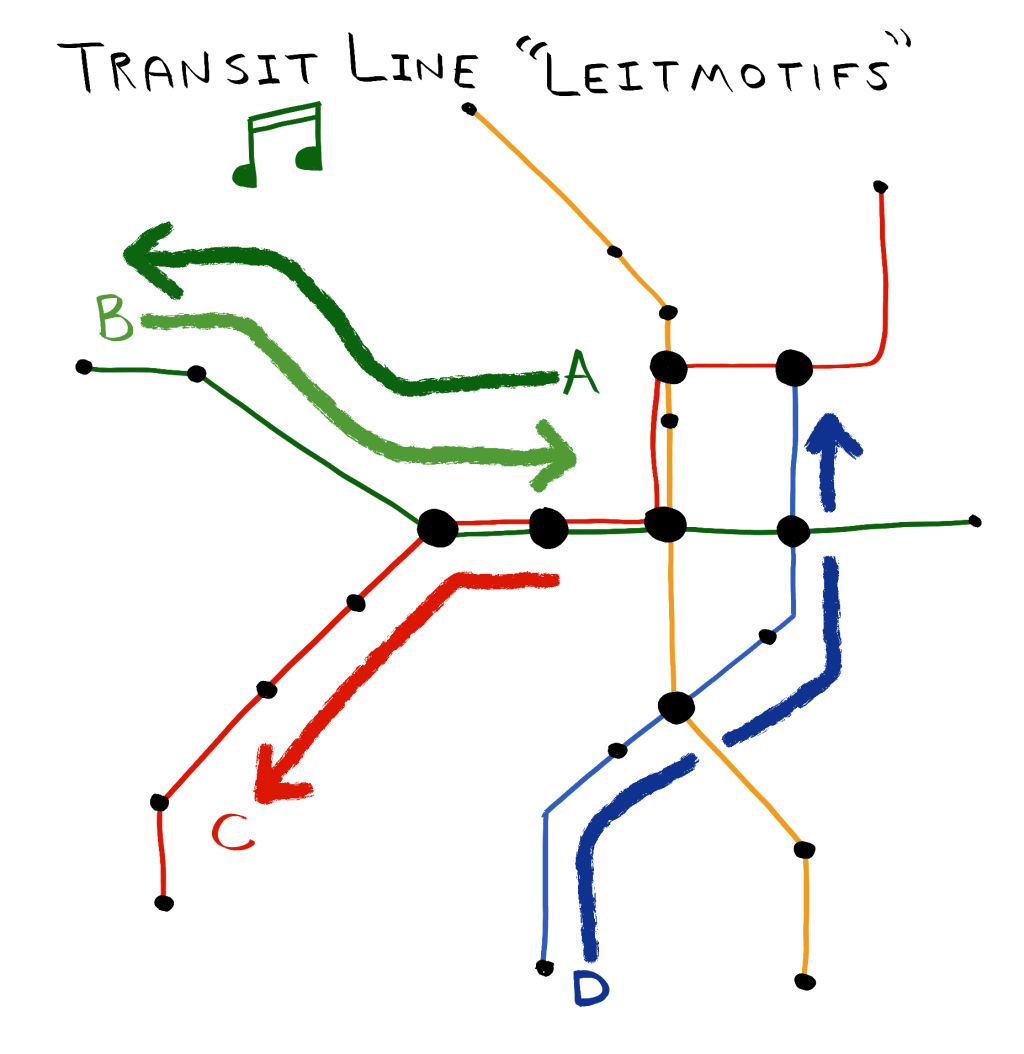
The issue: In cities with extensive public transit systems, it can be easy to get on the wrong bus/train/subway or miss your stop. Obviously, an astute transit-taker could realize their mistake by noticing the following: Stop names being verbally announced Stop names being indicated on a screen, even on buses. In some places, different metro…
-

Background: In many cities, there is no substantial funding for public transit. This results in extremely poor service (routes with minimal coverage of the city and few buses). This leads to a “death spiral” where people stop taking the (terrible) public transit, the service gets even worse, and so on. These problems can, in theory,…
 WorstPlans: updated every Monday since July 2014!
You must be logged in to post a comment.