
keyboard
-

Background: Certain types of office jobs, such as data entry, are limited by the typing speed of the operator. This is generally acceptable for humans, because human hands are adequate for keyboard typing. The smallest common keyboard has 61 keys (a so-called “60%” keyboard: https://www.google.com/search?q=60%25+keyboard). So the maximum possible human key coverage (Figure 1) is…
-
Background: Generally, the more letters / symbols your alphabet has, the more hassle it is to type on a keyboard. There are ways to mitigate this issue (e.g. Japanese and Chinese manage), but it’s a lot more straightforward if you can just cut down the number of symbols entirely. English, with 26 letters plus a…
-
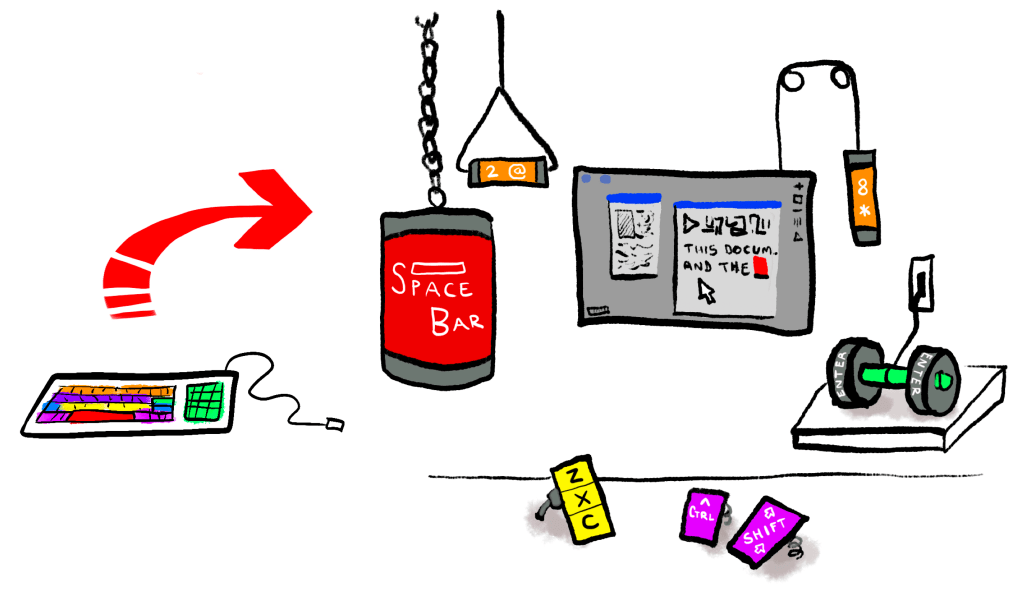
Background: Many people spend their entire workday sitting down, typing on a keyboard. The issue: Sitting all day is generally considered to be sub-optimal for human health, and typing on a keyboard (Figure 1) may lead to certain types of repetitive stress injury. In order to fix this, we need a way to allow keyboard-focused…
-

When using a computer, phone, or tablet, it is occasionally the case that a user must type in numbers. Typing numbers on a computer with a 12-digit physical numeric keypad is fast and easy (Figure 1). Unfortunately, laptops frequently no longer have these hardware keypads, and smartphones and tablets never did. The issue: The “soft”…
 WorstPlans: updated every Monday since July 2014!