Language
-
Stop living in barbaric savagery with the English words “left” and “right.” Ascend to the next level of consciousness and realize your new potential with this new secret wisdom only for the most enlightened individuals.
aa, aard, aardvark, alfa, alphabet, bet, English language, improved words, left, left right, left-to-right, port, right, starboard, vark, zz
The issue: People often confuse the directions “left” and “right.” Additionally, “right” can additionally mean “correct,” which leads to the exchange: “Should I turn left here?” “Right.” This is stupid and must be fixed if English is going to remain competitive with the world’s top languages, like Esperanto (Figure 1) and Loglan. Proposal: Instead…
-
Erase all of written history to hide our shameful alphabet-based mistakes from the future! After reading this, you will think Fahrenheit 451 is an instruction manual.
also that X-is-an-instruction-manual is already a joke about 1984, ambiguity, ambiguous letters, Celcius 233, Centipede 233, Centrigrade 233, erase the mistakes of the past, Fahrenheit 451, fix Latin letters, fix the English language, letters, never learn from the past, that one movie Equilibrium I guess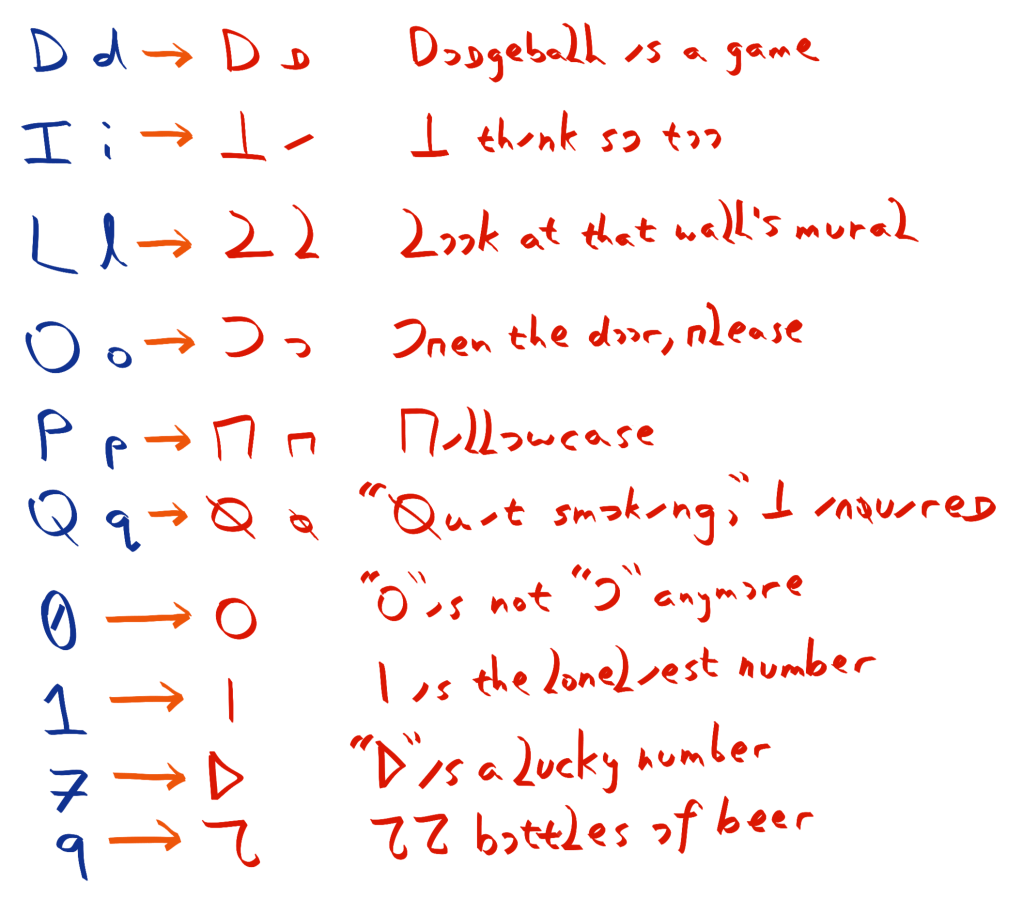
The issue: Latin-based writing systems—like the one your’e reading right now—have a serious problem: many letters and numbers look exactly the same! The most obvious example (Figure 1) is probably “l” (lower-case “L”) and “I” (upper-case “i”). Benefits: Fixing these duplicated symbols, perhaps with the proposed new symbols in Figure 3, has a number of…
-

Background: Columns of text in a book or newspaper are generally formatted in the fully justified style (Figure 1), where the text always lines up exactly on both the left and right edges. Fig. 1: The “justify text” button (circled in red) can be found in nearly every text editor. The issue: Justified text works…
-
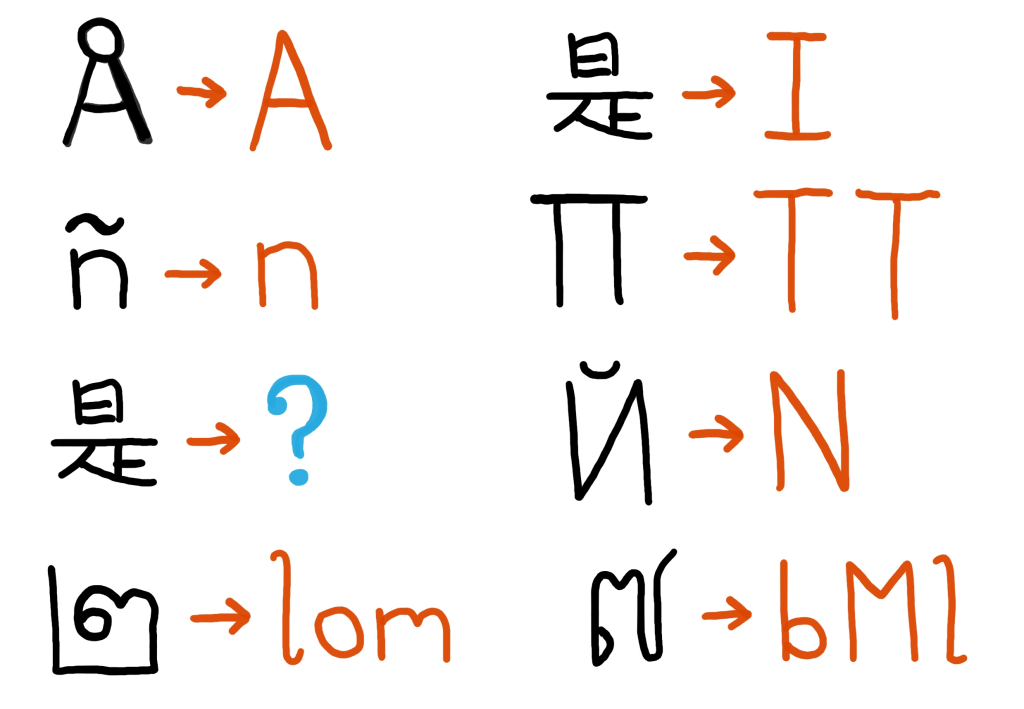
The issue: Many computers are unable to handle letters that don’t fall into the set of Latin characters used by English. Even though the Unicode standard has greatly improved multi-character-set accessibility, problems still arise: A character might not exist in a chosen font. For example, “Egyptian Hieroglyph of a bird catching a fish” is probably…
-
The issue: English has a large number of words with multiple syllables. We could save so much time if all these words were replaced with unique single–syllable equivalents! Proposal: For example, in the section above, we would change the following words: English -> Eng number -> noim multiple -> mult syllable(s) –> syllb(s) replace(d) -> roup(ed) unique ->…
-
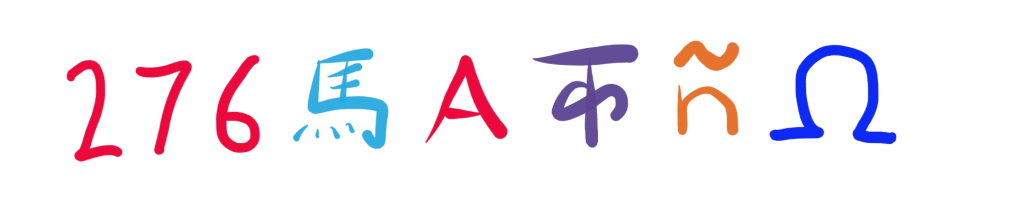
Background: You’re probably familiar with web sites that have very particular password requirements: “Your password must contain a number, capital letter, and special character.” “Your password must contain the name of a Triple Crown-winning horse.” “Your password cannot contain your username.” The purpose of these requirements is usually to either: Require that the password not…
-
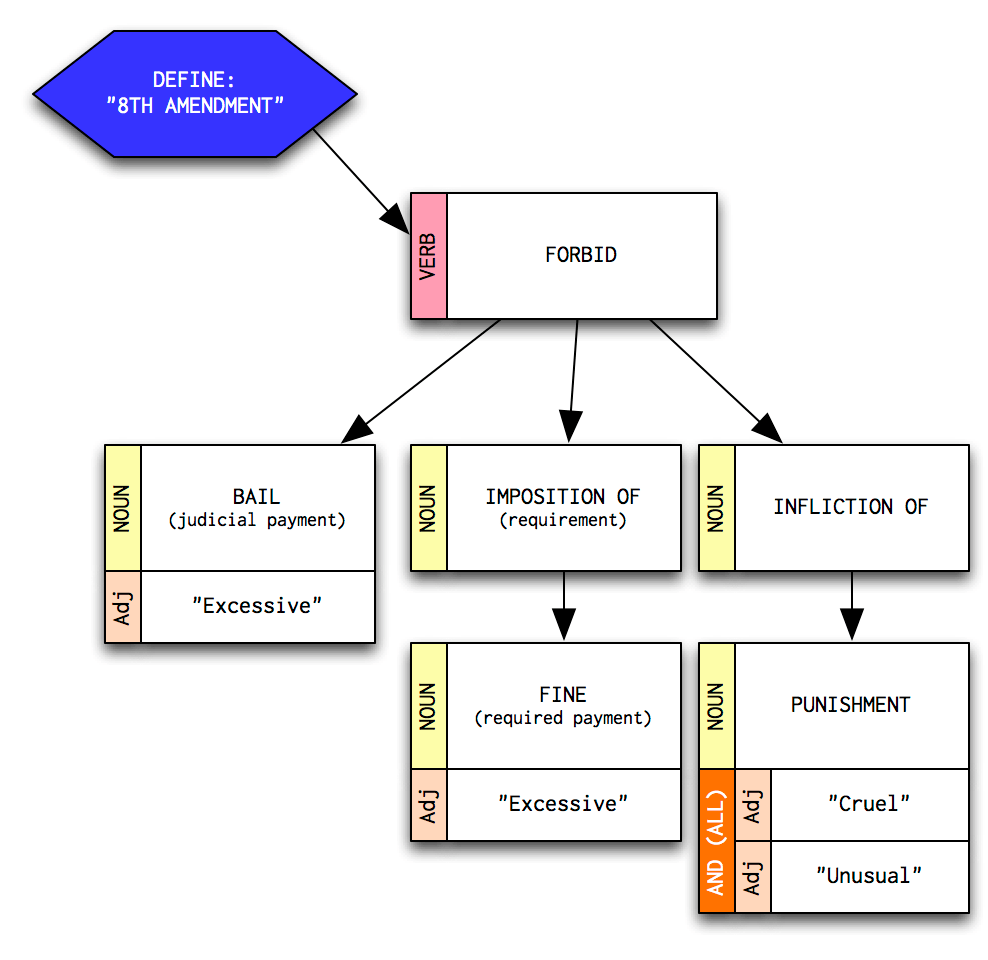
Background: Misunderstandings of meaning are often encountered due to ambiguities in human language. This causes problems in several ways, particularly in: Translation between languages Interpretation of laws 1) In regards to translation: For any non-trivial translation between two languages, a human is still required in order to figure out the meaning of it and a…
-

Background: Over time, old files tend accumulate on one’s computer. However, cleaning out a computer is an annoying and time-consuming task. In the past, storage increased at a rate such that old files could be safely ignored forever. But modern laptops may actually have less (although faster) storage than ones from five years ago.…
-

Background: As time goes on, certain emoji will become obsolete. Some of them already have! Although this is not a huge problem right now, it may become one in the future: will anyone understand what the “pager” emoji means in 100 years? Fig 1: In a hundred years, this pager icon will will baffle and…
-

Background: Our current alphabet is derived from an ancient system of representational icons. These icons were once pictures of actual objects, but have been simplified to an easier-to-write form over the millennia. For example, according to the inerrant source of knowledge known as Wikipedia (http://en.wikipedia.org/wiki/Phoenician_alphabet): The letter “Q” used to be one of these: This…
 WorstPlans: updated every Monday since July 2014!
You must be logged in to post a comment.