
Language
-
Background: It’s time-consuming to learn a language. It’s also generally advantageous for a language to have as many speakers as possible, since more speakers means more chance of being able to use a language in a given situation. (In the extreme case, a “secret” language that only one person knew would have very minimal utility.)…
-
Background: In some languages with non-phonetic elements (e.g. Japanese kanji), there can be additional phonetic annotations above the symbols (Figure 1) to clarify the pronunciation of a non-obvious word. This is particularly useful for students, and for clarifying the pronunciation of rare words. Proposal: Strangely, the English language does not frequently employ this style of…
-
Background: Generally, the more letters / symbols your alphabet has, the more hassle it is to type on a keyboard. There are ways to mitigate this issue (e.g. Japanese and Chinese manage), but it’s a lot more straightforward if you can just cut down the number of symbols entirely. English, with 26 letters plus a…
-
Background: When reading the news, people should ideally form opinions of the events in question based on the actual merits being reported. However, a frequent approach is: “Is this something that my nation or my political party did? Then I’m sure it’s good.” The Issue: Although this is undeniably often a successful heuristic (e.g. “cannibal…
-
Background: The specific etymology of most food names is lost in ancient history. But a few foods are named after specific people. One of the most notable is the food/concept of a “sandwich,” named after “John Montagu, 4th Earl of Sandwich” (https://en.wikipedia.org/wiki/John_Montagu,_4th_Earl_of_Sandwich). Proposal: This opens up a new possibility for gaining personal fame and fortune:…
-
Background: In English, there are names for days of the week (Monday, Tuesday, …) and months (January, February, …). The Issue: But it is not actually necessary for weekdays and months to be named—it’s just a bunch of extra words that serve no purpose! Many other languages (e.g. Chinese) manage with days named “Day #1,…
-
Background: When specifying a time, some positions may have either one or two digits (e.g. “1 PM” vs “11 PM”), but other positions always have a leading zero, no matter what (e.g. “1:01” and “1:11” both have three digits). Proposal: The inconsistency in digits is unnecessary and leads to weird sorting behavior. For example, if…
-

Background: Two obvious qualities that contribute to making an alphabet “good”: It’s quick to write. The letters can be distinguished unambiguously. (Information density might also be worth considering—we don’t want the letters to take up too much space—but we’ll be ignoring it here.) Sometimes, speed-of-writing and ease-of-reading is a tradeoff: consider the shorthand shown in…
-
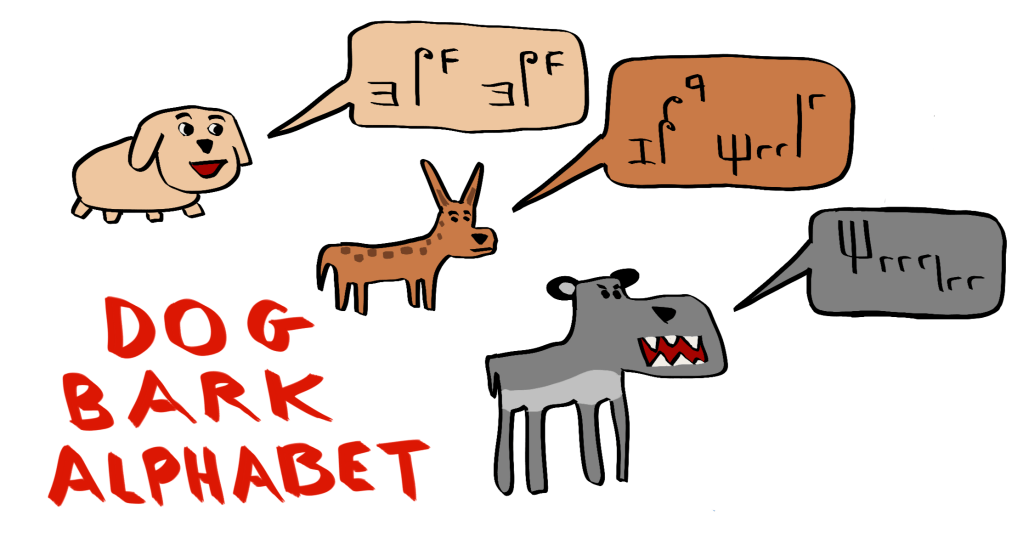
Background: Written languages have generally been optimized for the most meaningful elements of speech, so sometimes strange workarounds are required to capture certain subtleties: e.g. capital letters for YELLING, alternating capitalization for “thE spEaKer is VEry StUpid,” ellipses for a stilted-last-gasps sort of speech (“tell… them… the… killer… was…”), or the HTML-inspired “/s” for “please…
-
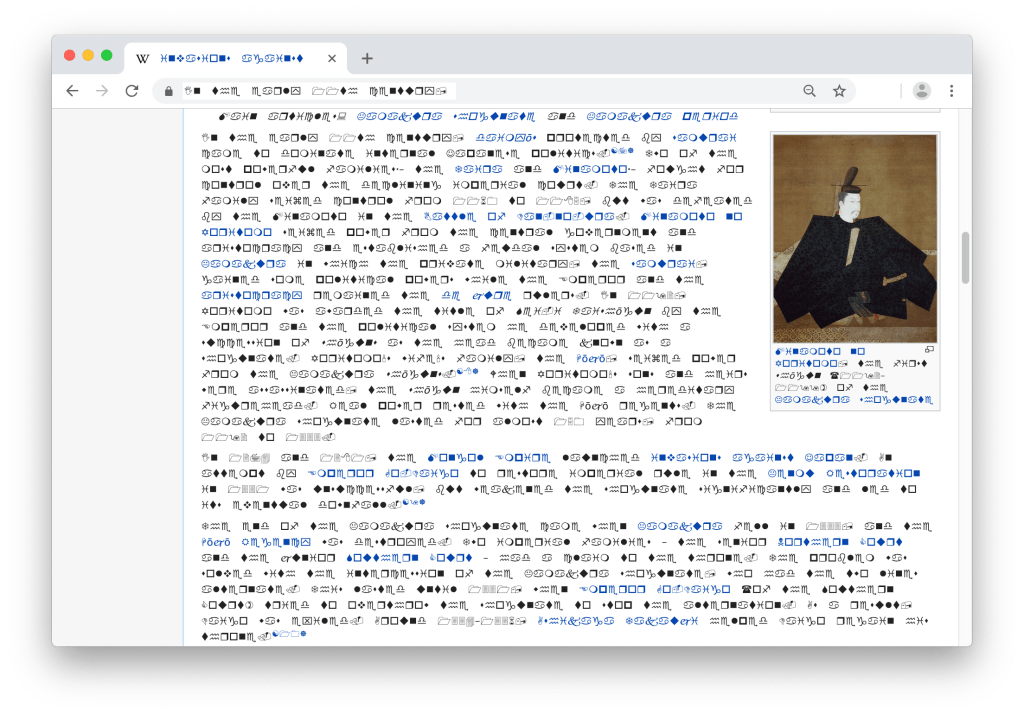
Background: Once you know how to read, it’s impossible to see text the same way as you did before—you will inescapably recognize the symbols as letters the instant that you see them. The issue: This “automatic” parsing of written language makes it easy to forget how much effort was required to initially learn how to…
 WorstPlans: updated every Monday since July 2014!
You must be logged in to post a comment.