
Law, Government, & Politics
-
Background: Many national and provincial borders are defined in highly arbitrary fashions that have no underlying geographical rationale: these often appear as straight lines on a map, frequently passing through uninhabitable wastelands. For this proposal, we’ll discuss borders that satisfy these criteria: Border region is uninhabited. Border region has no strategic value. Border region has…
-
Background: Most legal systems are extraordinarily complicated and are full of strange rules and loopholes, so the average person has a very superficial understanding of law (as practiced in movies) at best. Just like law, there’s another popular pastime that’s full of rules, thousands of pages of errata, and millions of Internet posts arguing about…
-
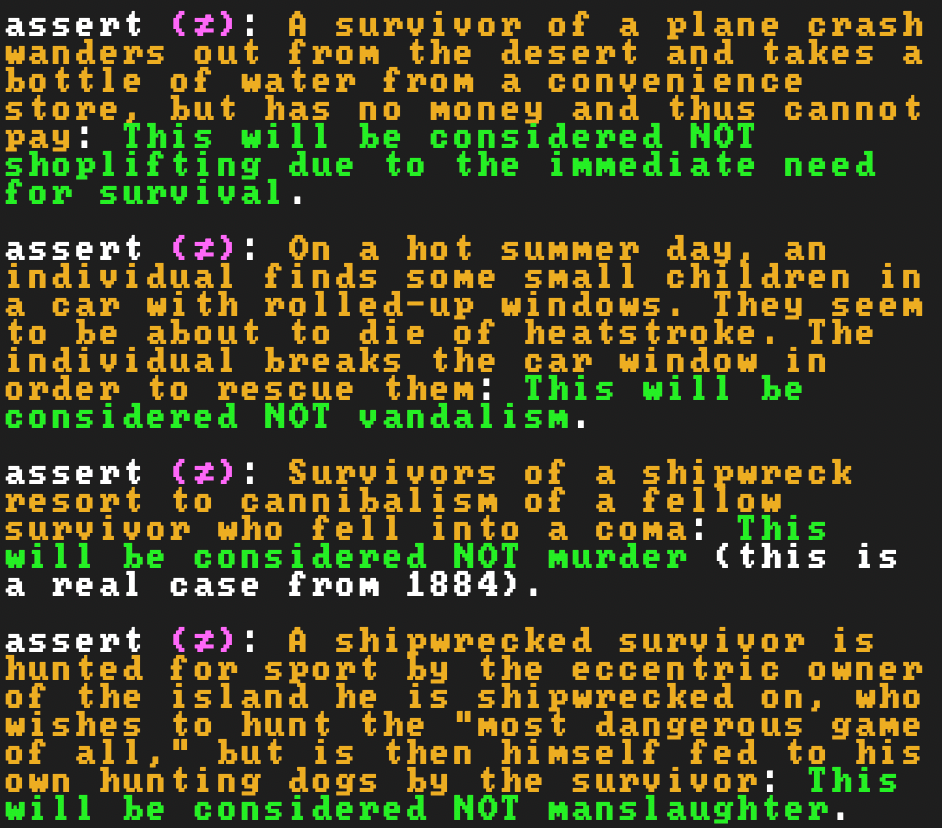
Background: Laws are often worded in an extremely confusing fashion, and the exact implications of all corner cases of a law are rarely considered when it is written. The issue: Sometimes, the “legally correct” (letter of the law) outcome of a case is either unclear or is even in obvious contradiction to the actual intent…
-

Background: When discussing a topic, it’s convenient to have “shorthand” terms for complicated concepts: e.g. “absolute monarchy” or “representative democracy.” The issue: Somehow, English completely lacks a term for describing the upcoming governments of the future—there is NO quick way to describe “a dictatorship, but the (human) dictator rules over the citizenry using an army…
-

The issue: Voters frequently are uninterested in the details of government: frequently, elections have low turnout even when critical issues are at stake. Proposal: Paradoxically, people can be more excited less important issues that are easier to understand (this is also referred to as “bikeshedding”). Thus, this proposal aims to “trick” voters into being interested…
-

Background: Every four years, interest is re-kindled in the odd “Electoral College”-based method of tallying up American presidential votes. Since the electoral votes are actually assigned on a per-state[*] basis (Figure 1), this has the side effect of making the presidential elections hinge on a few “battleground” districts—tiny subsets of swing states whose voting outcome…
-
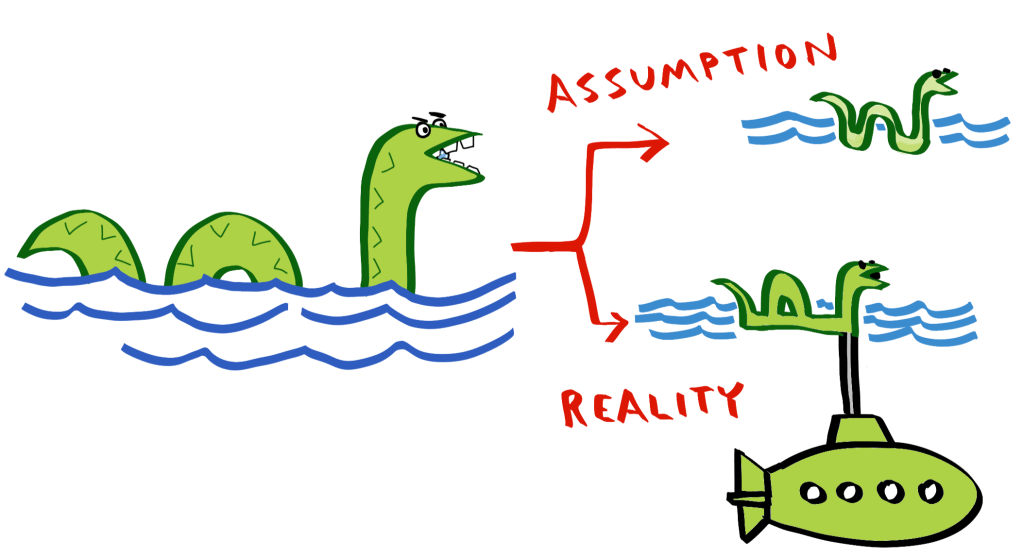
Background: Modern submarines use a periscope-like electronic camera (a “photonics mast.”) to view the world above the waves. The issue: The problem is twofold: If an adversary spots a periscope, there isn’t much doubt as to what’s under the waves: it’s a submarine (Figure 1). Periscope designs are apparently specific to each nation, so just…
-

Background: Militaries generally have physical fitness requirements and a maximum age cutoff for enlistees. The issue: Unfortunately, in most countries, these standards completely exclude government officials from boots-on-the-ground participation in any military operations. This is unfair to those officials: they performed the diplomatic and logistical preparation for war, yet are prevented from obtaining direct personal…
-

Background: The democratic process depends on at least some fraction of voters making an informed decision. The issue: However, many people find politics uninteresting (Figure 1), and vote semi-randomly and/or for the most candidate with the most camera-friendly smile. This is not an ideal way to choose a country’s leaders. Proposal: This one is simple:…
-

Background: Liability law is extremely complicated and counterintuitive. However, one common factor is that it appears to generally be beneficial—or legally required—for the owner of a potential hazard to warn others about that hazard (e.g. the omnipresent California Prop 65 warnings: “Warning: This location contains chemicals that are known to cause cancer”). The issue: Unfortunately,…
 WorstPlans: updated every Monday since July 2014!