
Background:
In most houses, the process for starting a shower in the morning is as follows:
- If your shower has separate hot & cold taps: turn the hot tap on first, and wait for the water to get hot. Then, turn on the cold water tap (while avoiding being scalded by the hot water that is currently streaming out of the shower head).
- If your shower has a single faucet handle: pivot the handle to the “hot” position to start the hot water. (You could put the handle somewhere in the middle of the hot-cold range, but then you’re just wasting cold water for no purpose.) Once the water is hot, pivot the handle back to the “warm” position.
The Issue:
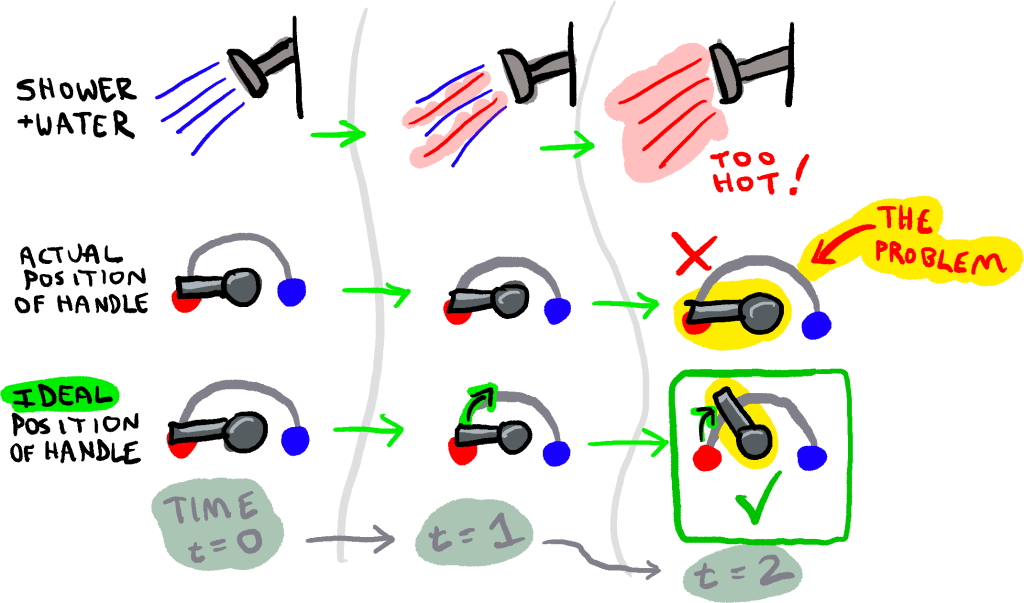
The fundamental issue is that the initial “flush the cold water out of the pipes” handle position (hot water only) is different from the final “taking a shower” handle position (mixed hot & cold water). See Figure 1.
Proposal:
The solution is simple: a “jack-in-the-box”-like mechanism (Figure 2) that can push the shower handle from “hot water” to “warm water” once the water is the correct temperature.
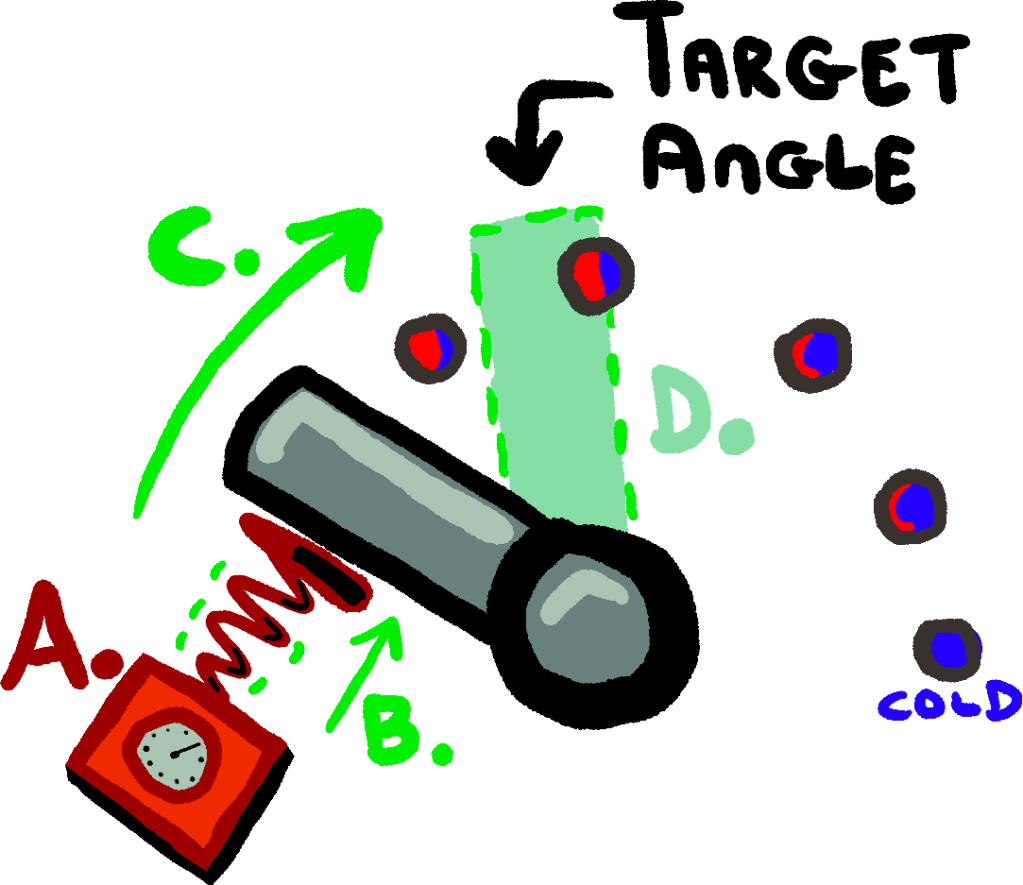
As a bonus, the spring is automatically reset (and the timer is started again) whenever the user pushes the shower handle all the way to the left. No additional intelligence is needed on the part of the spring-loaded lever-pusher!
Conclusion:
A slightly more robust version of this mechanism could also detect the actual water temperature, rather than just time. There are probably also fancy electronic shower heads that handle all of this temperature-sensing stuff for you, but they lack the simplicity of this all-mechanical solution!
It’s also possible that the most practical solution to this problem is for a person to draw the “comfortable temperature” angle onto their shower wall with a marker and then just accept that they’ll waste a little bit of cold water while waiting for the shower to get warm.
PROS: Prevents scalding. May help with water conservation by preventing wasting of cold water during the hot-water pipe flushing.
CONS: Regrettably, there is no standardization for shower faucet handles, so it’s likely that dozens of different shower-adjuster form factors would be required in order to solve this problem for existing shower designs.
Originally published 2025-05-04.
Thanks to J.D.L. for this idea.


You must be logged in to post a comment.