
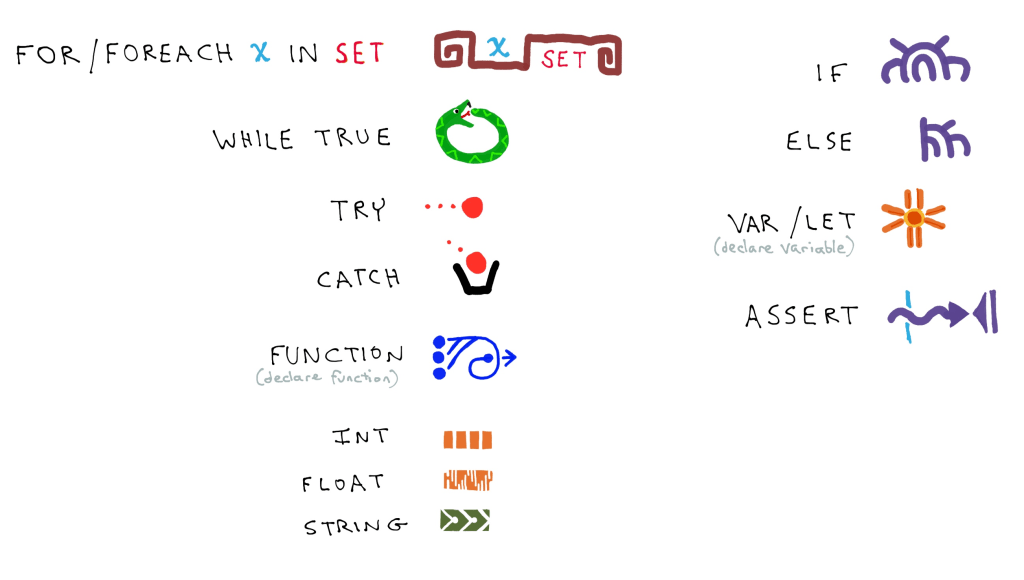
Background:
Essentially all major programming languages exclusively use keywords written in English. (For a couple of exceptions, see the addendum at the end.)
But this doesn’t have to be the case!
Proposal:
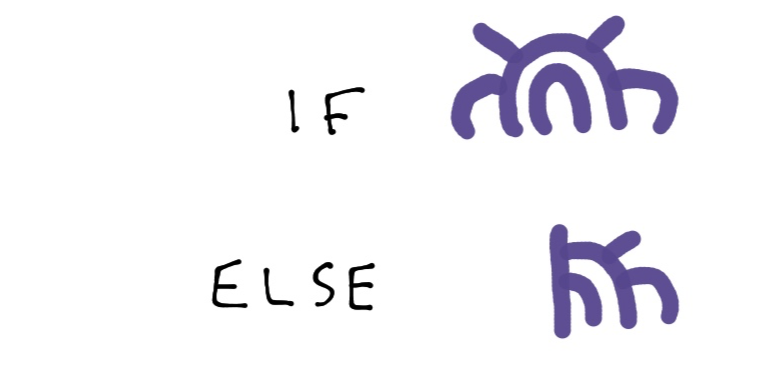
By using symbols instead of words, we can convey a concept both more concisely and more easily across languages.
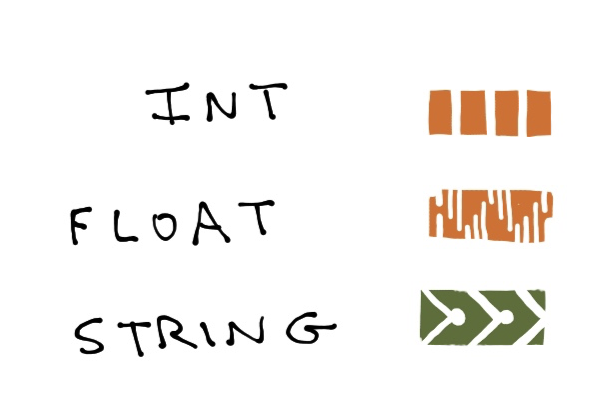
See below for a few suggested changes:


Conclusion:
Don’t write another line of code in your old-fashioned text-based programming language! Programming emoji is the future.
PROS: More easily seen at small font sizes. Works across languages, and prevents any misunderstanding arising from a word having an existing unrelated-to-programming meaning (e.g. “float” meaning “to rise to the surface of water” in addition to “a ‘floating point’ number”).
CONS: Requires new custom fonts and/or Emoji support.
A Complete List:

Addendum:
Here are a couple of programming languages that can make use of non-ASCII symbols:
- “APL,” a language created in 1964, is well known for making use of a special set of symbols. Here is an example from Wikipedia: (~R∊R∘.×R)/R←1↓ιR . It is actually possible to order a keyboard with these symbols printed right on the key caps!
- Perl 6 supports numerical characters like “⅒” (a fraction) or “Ⅻ” (a Roman numeral), as documented here.
 WorstPlans: updated every Monday since July 2014!
You must be logged in to post a comment.