
The Issue:
Art museums have their merits, but they are rarely described as “interactive.” For a large percentage of the population, visiting an art museum is suspiciously similar to just viewing a tour on YouTube or seeing the same works in a printed book.

Proposal:
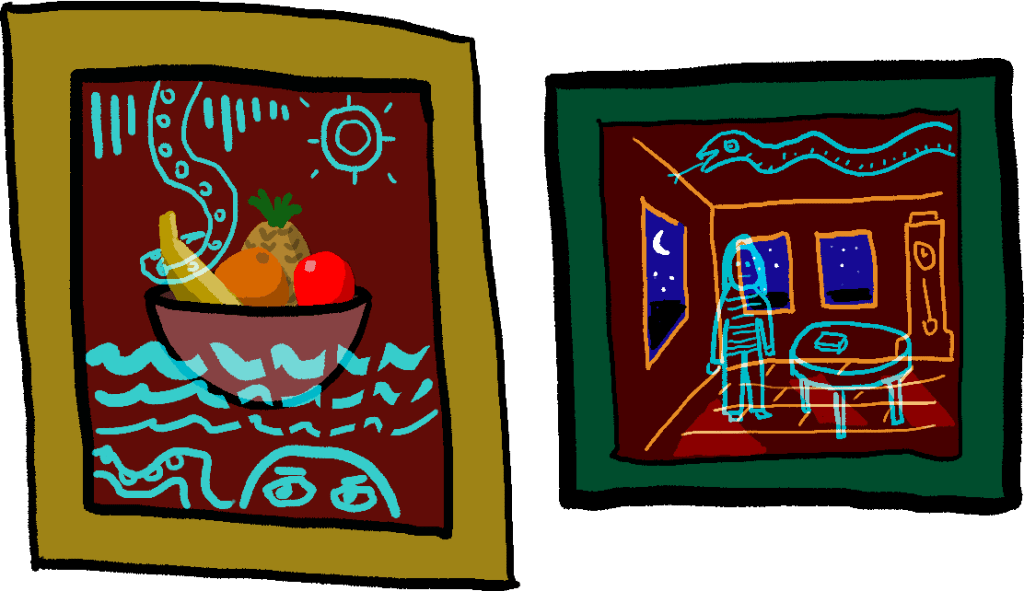
There’s a way to make the art viewing experience more interactive and bring a sort of “hidden occult mystery” element to even the most boring pieces: simply commission some new paintings where certain details of the painting are only visible under UV light, then issue UV flashlights to museum-goers.
A painting that has gotten this “UV mystery” treatment will provide an initial impression to the viewer, and then a second “surprise” impression (Figure 2) as the viewer shines their UV flashlight across the canvas. How delightful!
Conclusion:
This could make art museums interesting for a wider range of people, and could open up a new genre of “paintings with a surprising twist.” Is it possible that this has really never been done before?
PROS: Opens up a new genre of semi-interactive art! May entice younger audiences into the decadent and depraved world of Fine Art.
CONS: Children might scorch each others’ eyeballs with UV laser beams if the flashlights are too powerful, so it’s important to be mindful of the flashlight wattage.
Originally published 2026-06-22.


You must be logged in to post a comment.