
Background:
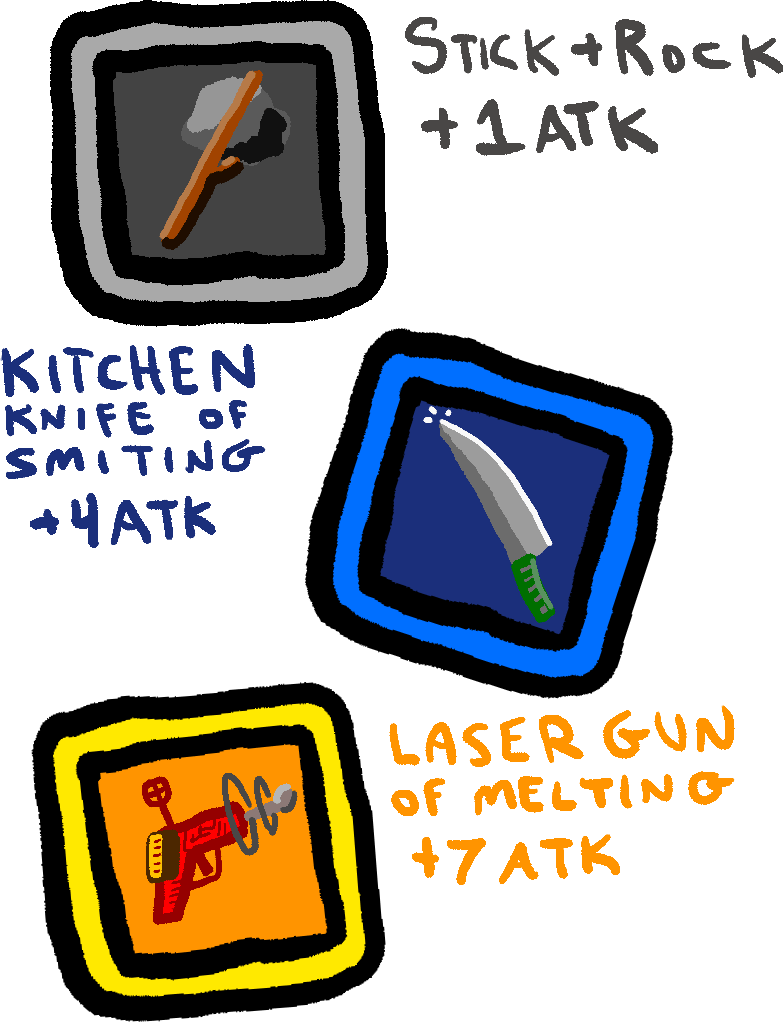
In video games, a major user interface innovation was to color-code different item qualities (or “tiers”). This was popularized (and possibly invented) by the 1996 game Diablo, where boring non-magical items were gray, while enchanted objects were color-coded by quality “tier” (Figure 1).
The Issue:
The difficulty of evaluating confusingly named objects is not limited to video games. Famously, Microsoft’s Xbox branding included the following four names (listed out-of-order):
- “Xbox Series X”
- “Xbox Series S”
- “Xbox One”
- “Xbox One S”
One of these is a premium “top tier” console, while another is a budget version of a previous-generation console. (Can you guess which is which?) Color-coding (or better naming) could have minimized customer confusion.
Proposal:
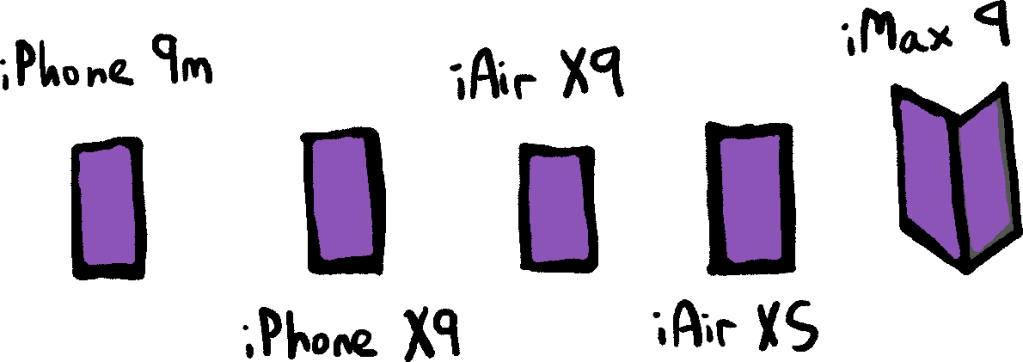
The proposal is simple: all consumer products in should be color-coded to indicate their “tier.” Let’s imagine a phone buyer trying to make sense of the (hypothetical) set of iPhone names in Figure 2:
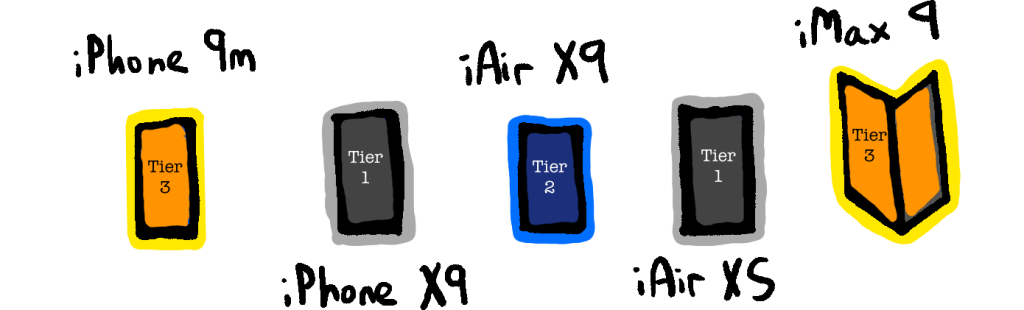
If we color-code the phones in Figure 2, the confusion is gone!
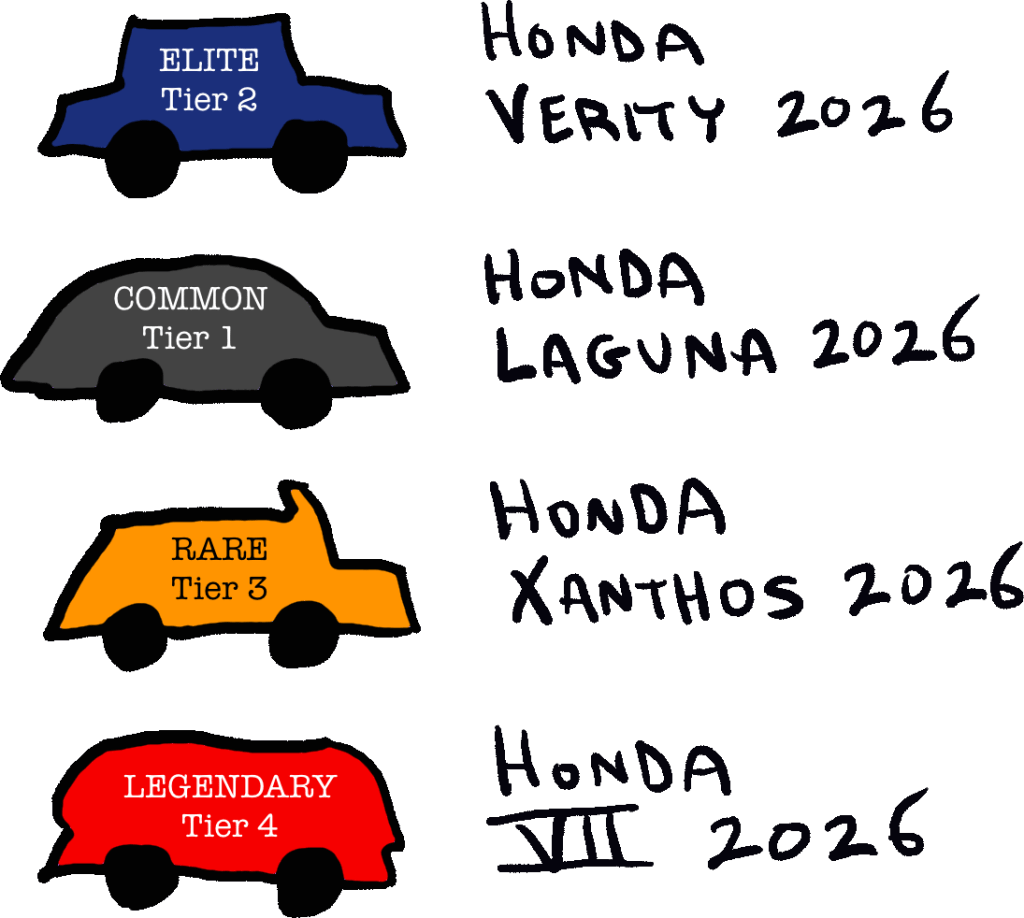
Cars could also benefit from this color-coding scheme, since manufacturers often sell several roughly-equivalent cars with varying levels of “luxury” (Figure 4).
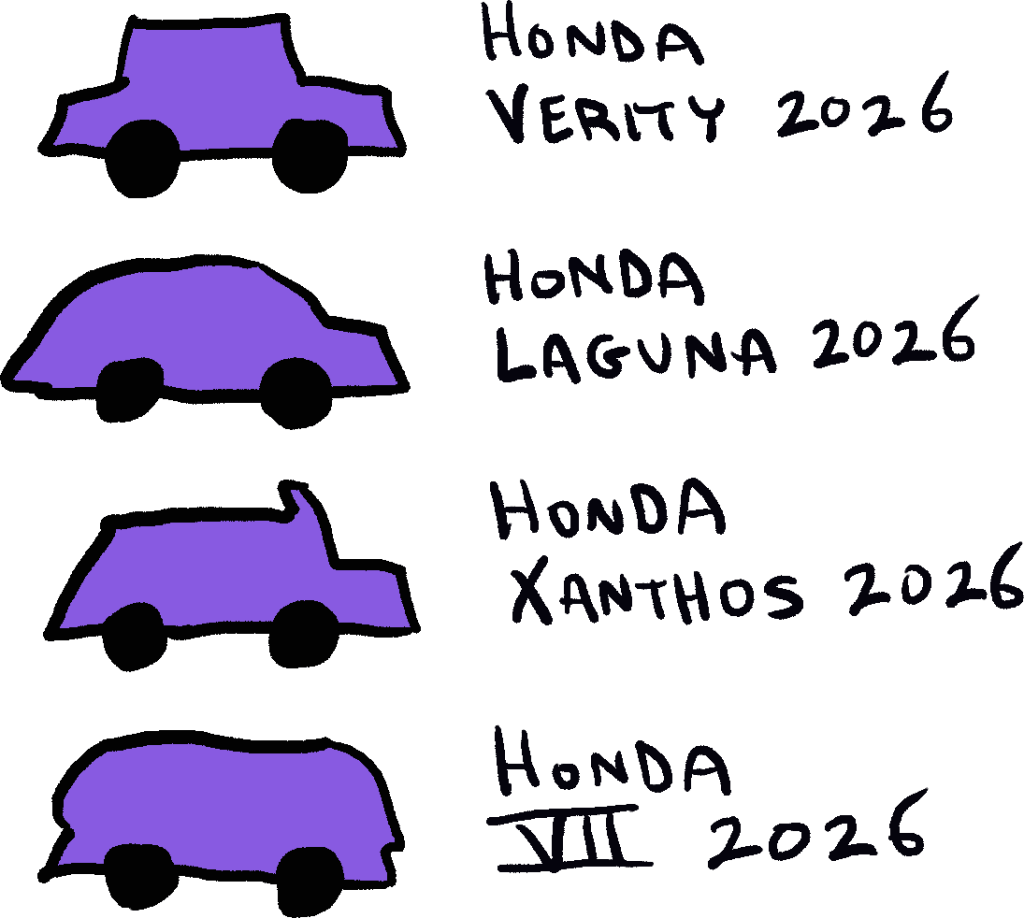
If we apply tier colors to the cars, it becomes immediately obvious which car is the entry-level one and which is the fancy luxury version:
Conclusion:
If these tiers were actually used in a consistent manner within a product line, this could actually help consumers. This is probably most likely to occur when there is a natural ordering of quality, as with airline seats (economy → business → first class).
PROS: Would be very useful when comparing similar products at a glance.
CONS: Marketers would probably refuse to use the lower-end colors. Perhaps even the cheapest entry-level car would be colored red and labeled “LEGENDARY TOP-TIER CAR.”
Originally published 2026-03-02.
 WorstPlans: updated every Monday since July 2014!
You must be logged in to post a comment.