
Background:
Learning a foreign language can be time-consuming, primarily due to the large number of words that need to be memorized.
Some attempts have been made to make this process easier by making a “common” second language that everyone could learn (the most well-known of these is probably https://en.wikipedia.org/wiki/Esperanto). This would, in theory, fix the problem of inability to communicate: two people could always just switch to Esperanto if they didn’t share any other language.
Proposal:
Esperanto tries to facilitate communication by providing a single common language that everyone can learn. But that means people still have to learn this second language!
Instead, let’s solve the problem in a different way: by converging the words from all currently-existing languages into a new single language, which we will call “Globoyammer” (from “globe” plus “yammer”).
Obviously, no one wants to instantly abandon their native language, so this will need to be a gradual process: every year, representatives of all the world’s languages will gather and nominate a single word to be deleted from all currently-existing languages and replaced by a totally new Globoyammer word. In Figure 1, we investigate the possibility of deleting the word snake.

You might think that it would be difficult to get representatives from every country and language to agree on something, but the payoff here is so obvious that it will undoubtedly be extremely easy.
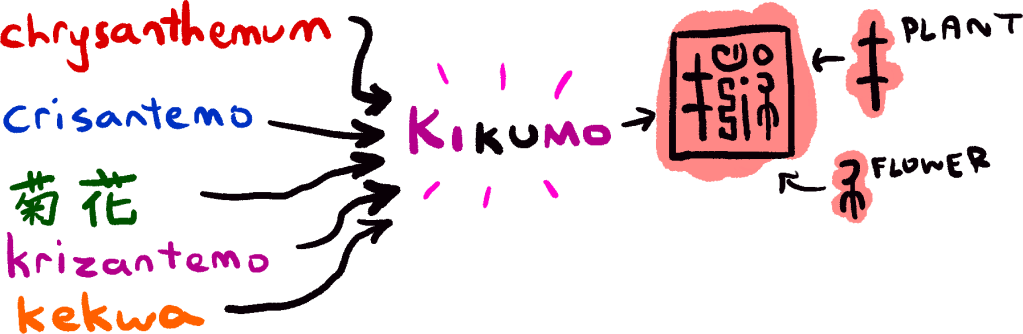
In addition to the obvious benefits of having a common word that everyone understands, we can also fix certain “weird” hard-to-pronounce sounds (e.g. the various “th” sounds in English, or the “rr” in Spanish) by replacing them with much easier sounds (Figure 2).
Conclusion:
Although one word per year may seem like a pointlessly small amount, think about it from the long-term perspective: if humans had started at the beginning of recorded history, we would be basically done by now! (At least, for all reasonably common words.) But, since that didn’t happen, the second best time to start is today.
PROS: Having a common vocabulary between languages should be especially helpful for communicating time-sensitive warnings. For example, if an English speaker sees this text on a door: そのドアの後ろには致命的なヘビがいます!, they might open it without realizing that there is a deadly snake behind the door.
CONS: Old songs and poetry will probably lose some of their impact due to the change in vocabulary (for example, anything that relied on rhyming or specific syllables will be difficult or impossible to translate into Globoyammer).
Originally published 2024-06-10.
 WorstPlans: updated every Monday since July 2014!
You must be logged in to post a comment.