
The Issue:
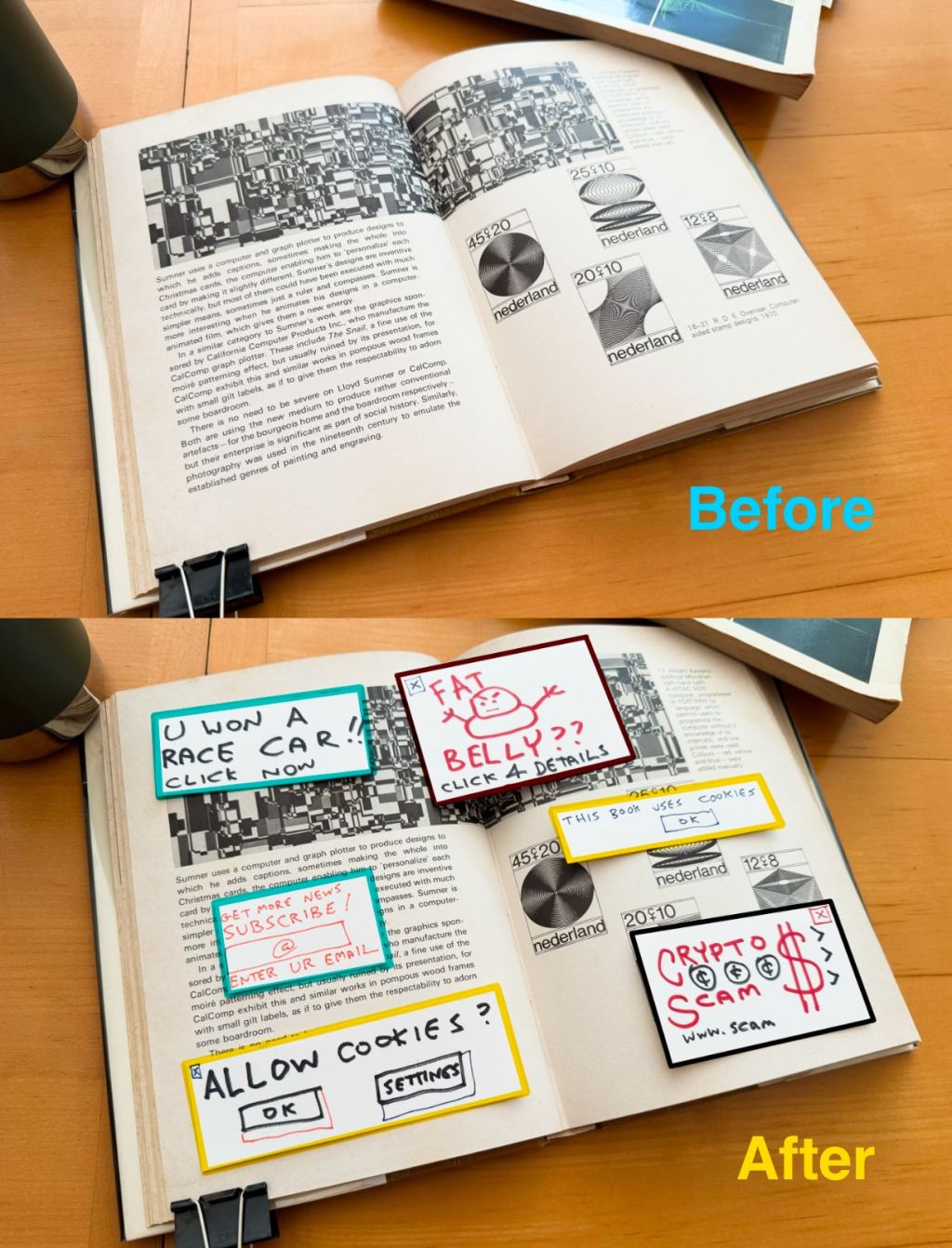
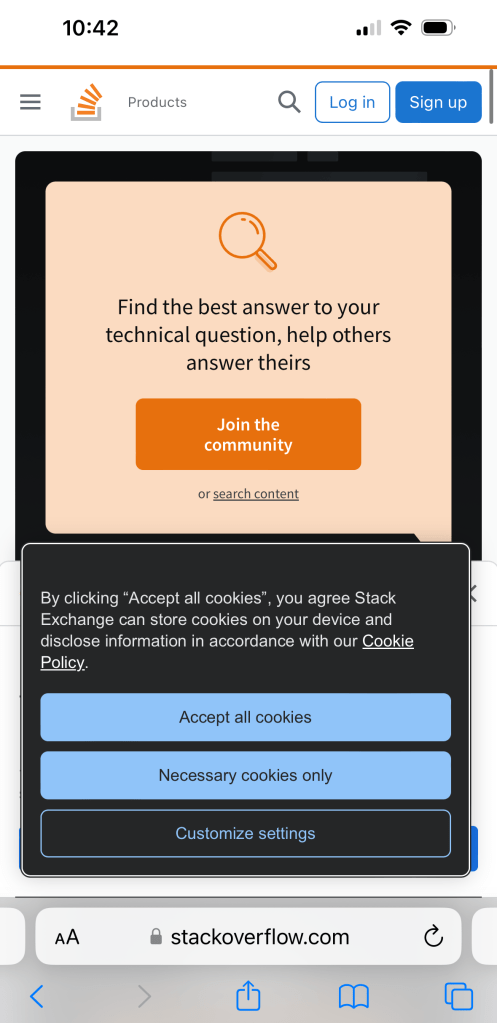
The book-reading experience has not fundamentally changed in hundreds of years. What if we could “modernize” the experience by bringing the experience of reading articles on the web (Figure 1) to the physical-book form factor?
Proposal:
The solution is simple: a “normal” book can be enhanced with the normal bonus features of Internet articles (as mocked up in Figure 1), including, but not limited to:
- “This web site uses cookies. ALLOW ALL / NECESSARY COOKIES / DENY.”
- “You have used up your free articles for this month!“
- “Subscribe to our newsletter: enter your email here for 5 free articles.”

User Tracking:
With a physical book, it is also difficult for the publisher to gather tracking data. Did users read the whole book? Just the start? Who knows! Fortunately, we can solve this problem by including a free pre-paid postcard (addressed to the publisher) with each book. The reader would simply check off the the range(s) of pages that they read and send the postcard back in the mail.
PROS: Should make the book-reading experience more familiar and pleasant to readers who have grown up in a post-smartphone era.
CONS: It would be difficult to update the physical pop-ups. What if the ads are no longer relevant, or new “cookie consent” laws are added? The book version of the pop-ups would, unfortunately, become out-of-date.
Originally published 2024-04-29.
 WorstPlans: updated every Monday since July 2014!
You must be logged in to post a comment.