
Background:
Astrology purports that the positions of celestial bodies can influence events on Earth, and possibly may even provide clues for predicting the future.
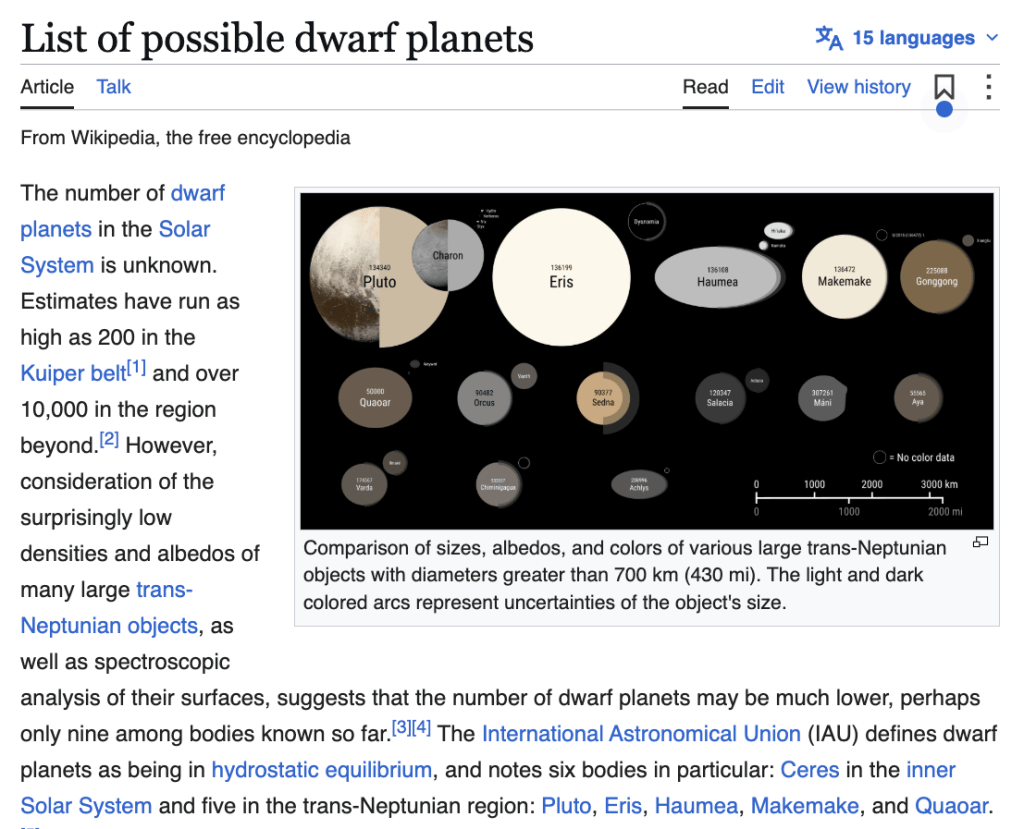
But astrological charts generally only include on the order of a dozen celestial objects of interest (e.g. Mercury, Venus, Mars, the Moon…). This is a strange limitation, since there are apparently at least THIRTY-SEVEN known objects in the solar system with a 400+ kilometer diameter (https://en.wikipedia.org/wiki/List_of_Solar_System_objects_by_size). (And this is totally ignoring the ~200+ hypothesized additional ones in super-distant orbits.)
The Issue:
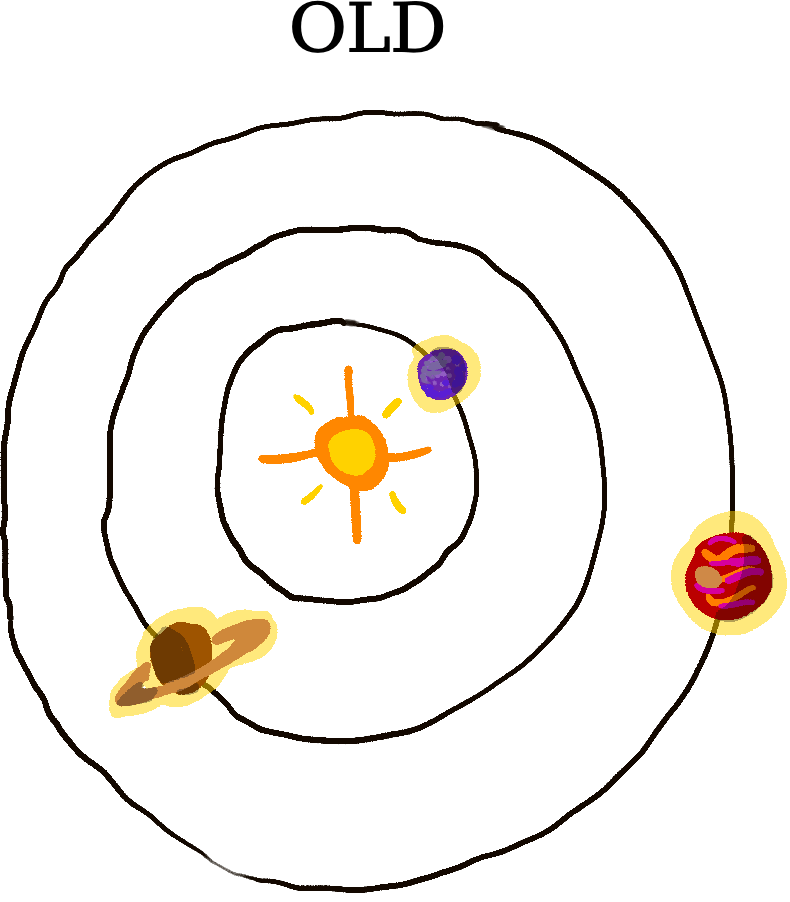
Presumably, the predictive power of astrology would be greatly increased if all the known celestial bodies were taken into account, instead of just the “most popular” ones (Figure 2) that people learn about in elementary school.
Proposal:
We must consider: why are we limiting ourselves to the arbitrary set of “planets that I learned about in 4th grade?”
Like, we wouldn’t randomly kick out Neptune from the astrology charts just because it was “too far away” to be visible with Renaissance-era telescopes?
So why does the asteroid Ceres get astrological respect (and even a symbol: “⚳”), but the much larger planet Eris (discovered in 2005) gets nothing? This is not a consistent situation. We should really pick one of two approaches:
- Either ONLY include planets that are visible to the naked eye (so Uranus and Neptune would get the boot).
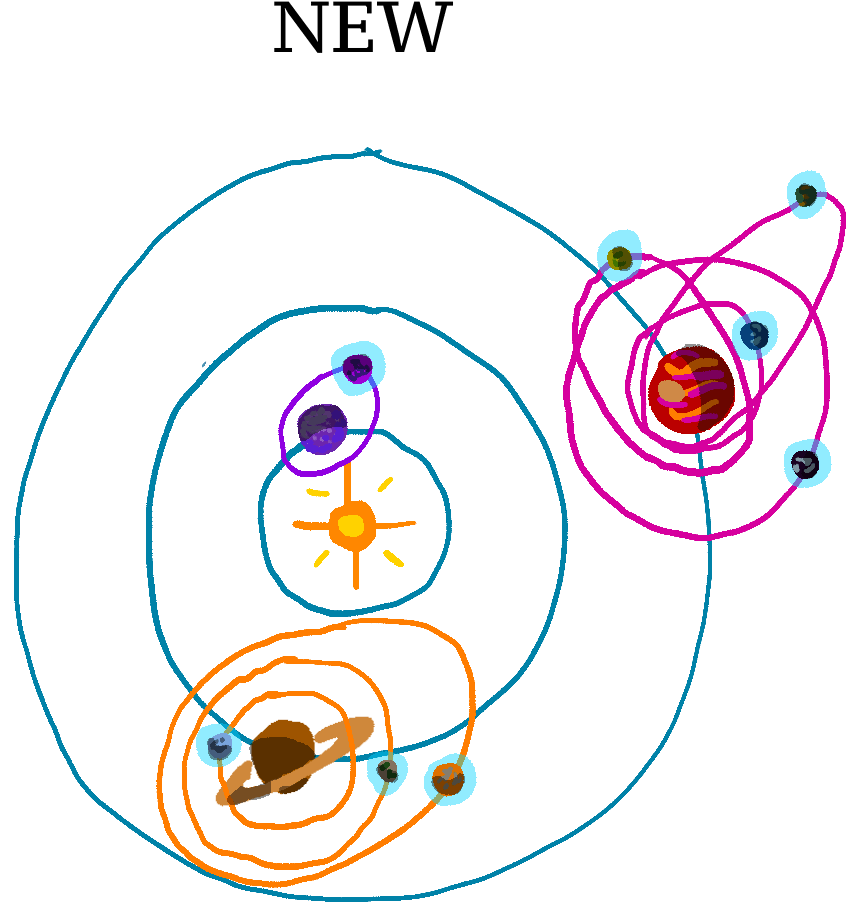
- Or also include all newly discovered planet-and-planet-adjacent objects (so we’d be adding 25-odd new celestial bodies to the astrological charts, including noteworthy moons of Jupiter and the like).
The second approach seems much more scientifically rigorous. Consider the additional data points that the additional moons and planets (Figure 3) could add!
Conclusion:
Although astronomers perplexingly decided to hobble their field of study by declaring “no more new planets will ever be discovered, and also Pluto is not a planet! Sorry guys, wrap it up, astronomy is done, we’ll never find anything else cool again, also no need to fund us anymore,” there’s no reason for astrologers to fall into this same trap of artificially limiting their discipline.
PROS: The discovery of new planets and other orbital objects will provide continued growth and employment in the astrology industry, since charts will need to be continuously updated.
CONS: Brings “planned obsolescence” to astrology charts, which could be seen as a user-hostile action.
Originally published 2026-11-23.


You must be logged in to post a comment.