
Background:
In the years before the invention of the car, the only way to design a city was with walking (or at least public transit) in mind.
However, once cars became widespread, cities started being designed with wide roads and large areas set aside for parking.
The Issue:
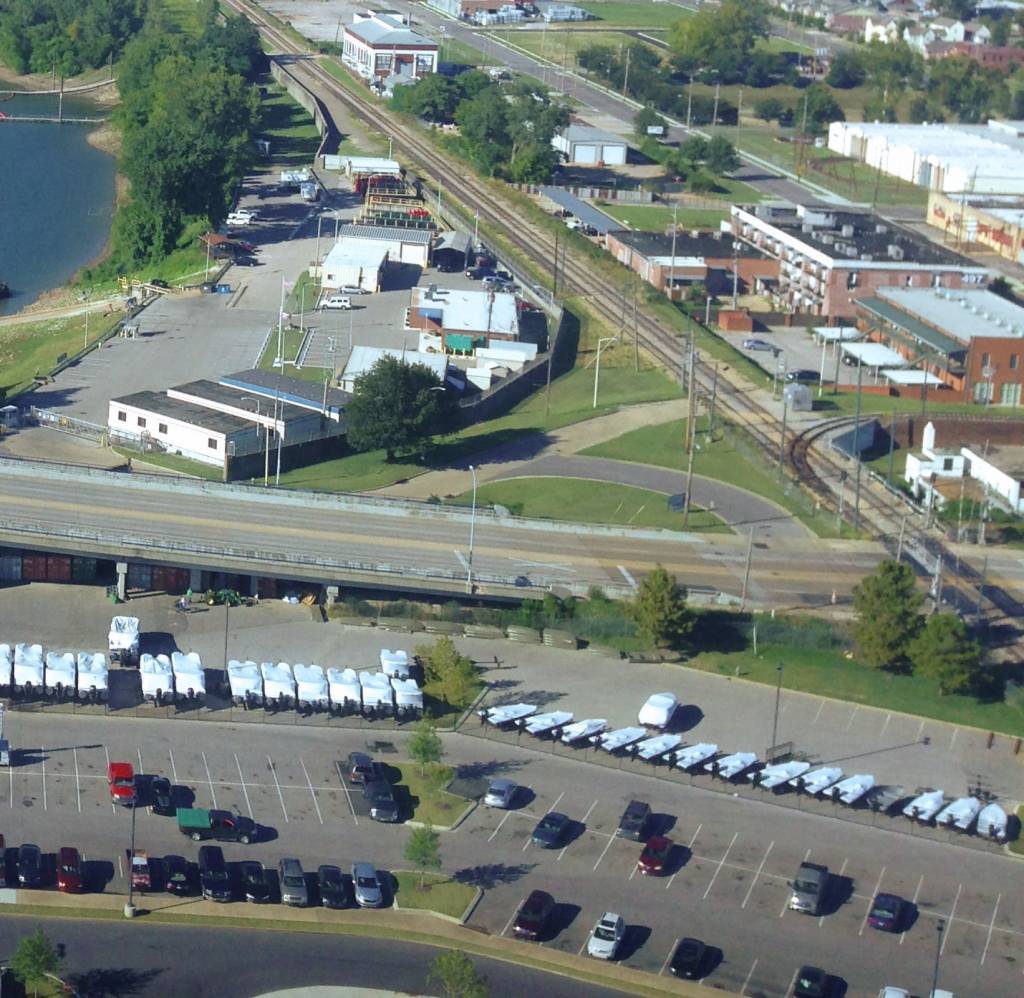
This style of design made driving very convenient, but accidentally also made cities very sprawl-y and unwalkable, with giant expanses of baking-hot parking lots separating all points of interest.
Let’s compare a city planned around car ownership (Figure 1) to a city that was designed before cars existed (Figure 2):

The Issue:
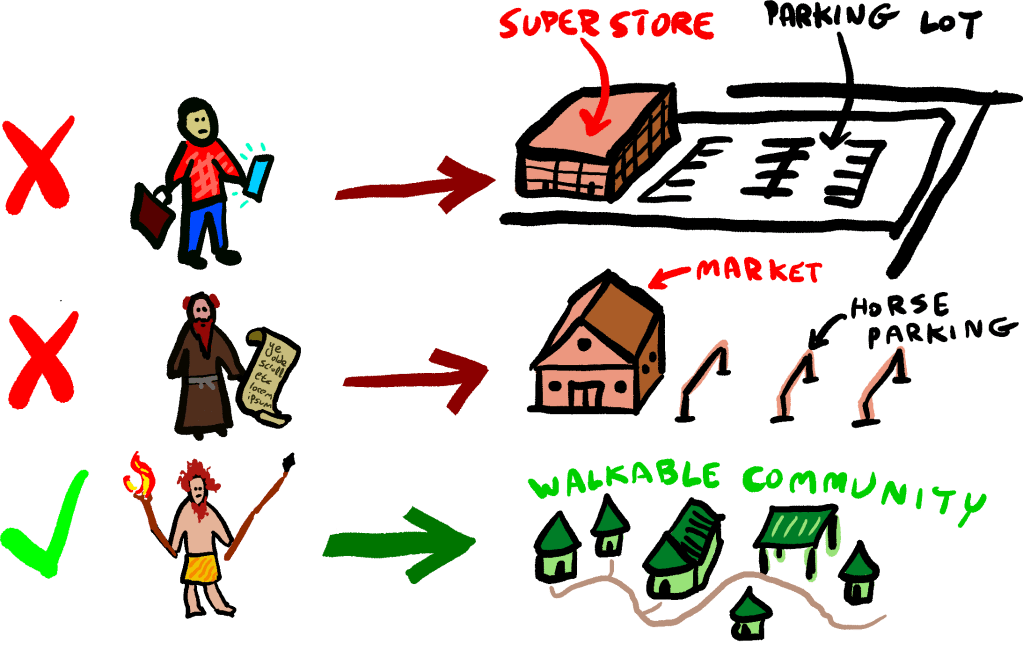
To improve the walkability of modern cities, we need to select a person with the right qualifications to perform the important urban planning work. There are three plausible choices:
- A licensed urban planner (Figure 3, top). This is the most common selection. Unfortunately, this has been proven to be a complete failure over 99% of the time (see Figure 1 for an example).
- An individual who belongs to a non-car-using subset of society (e.g. most Amish, or members of certain monastic orders). This is more promising: such planner may not instantly gravitate toward a “car for everything” solution. However, even if they don’t personally use cars, these people still know that cars exist, which may subtly influence their decision-making.
- A member of an uncontacted tribe deep within a jungle on a remote island. This is the best solution: such an individual is only familiar with walkable communities, and would have no idea that “giant parking lots” and “six lane roads with a human-impassible divider in the middle” could even exist. This is the recommended selection for planning a walkable community.
Conclusion:
City design must be done by an urban planner who does not even know what a car is. This requirement is likely to be completely successful and have almost no downsides.
PROS: Should improve the lifestyle of most city-dwellers. Provides economic opportunities for members of uncontacted tribes and recently-thawed cavemen (who are underrepresented in the modern job market).
CONS: The car-unaware planner will also not know about bicycles, so bike paths will definitely not be included in the walkable city plan either.
Originally published 2024-11-25.
 WorstPlans: updated every Monday since July 2014!
You must be logged in to post a comment.